


Berkeley is a strong fit for families who prioritize schools, walkability, and cultural richness, and for professionals who need reliable transit access to San Francisco and the East Bay. The main constraint is cost: monthly expenses run roughly $4,183 for a single person and $9,210 for a family of four, driven almost entirely by housing. Transit is genuinely excellent, UC Berkeley shapes the city’s energy and amenities in ways most college towns can’t match, and the Berkeley Unified School District uses a centralized assignment system that families need to understand before choosing a neighborhood.
If you’re budget-sensitive and need a 3-bedroom home at a relatively affordable rate, Berkeley may be challenging. If you can absorb the housing cost and value walkable neighborhoods, strong parks, and a short BART ride to downtown San Francisco, it rewards the investment.
Three things to know before you start:
- Housing is the single largest cost driver and the most competitive part of the market. Start your search well in advance of your target move date.
- BUSD’s centralized assignment means your street address does not guarantee your child’s school. Research the district’s enrollment rounds early.
- Berkeley has real transit infrastructure. A monthly pass runs around $86.70, and many residents skip car ownership entirely.
Pro Tip: Before you commit to a neighborhood, contact a local agent to get a realistic read on what’s available in your price range. Kenneth Hogan has worked the Berkeley market for over 20 years and can help you match your priorities to the right area.
Table of Contents
- What are the real pros and cons of living in Berkeley?
- Which Berkeley neighborhoods work best for families, students, and commuters?
- What does the Berkeley housing market actually look like right now?
- What do families need to know about Berkeley schools and childcare?
- How do you get around Berkeley, and how long does the commute to San Francisco take?
- What should you know about safety, services, and neighborhood amenities?
- What moving logistics do you actually need to handle before move-in day?
- How do you choose the right Berkeley neighborhood for your household?
- What does a Berkeley agent actually see that the listings don’t show you?
- Key Takeaways
- What newcomers to Berkeley consistently overlook
- Kenneth Hogan is ready to help you find the right home in Berkeley
- Useful sources and where to get official information
What are the real pros and cons of living in Berkeley?
Berkeley’s appeal is genuine, but so are its trade-offs. Understanding both upfront saves you from surprises after the lease is signed.
What makes Berkeley worth it
- Walkability and transit. Most central neighborhoods score high on walkability, and BART connects you to San Francisco in under an hour.
- Food and culture. The Gourmet Ghetto in North Berkeley helped define California cuisine. Farmers markets, independent restaurants, and a dense concentration of cafes make daily life genuinely enjoyable.
- Parks and open space. Tilden Regional Park sits right above the city. Smaller neighborhood parks are distributed throughout, and the Berkeley Marina offers waterfront access.
- UC Berkeley’s influence. Free and low-cost lectures, world-class libraries, performing arts, and a steady calendar of public events are available to anyone who lives nearby.
- Community resources. Berkeley Public Library branches, community centers, and neighborhood associations are active and well-funded compared to many Bay Area cities.
- Progressive, engaged community. If civic participation and neighborhood organizing matter to you, Berkeley has deep infrastructure for both.
Where Berkeley pushes back
- Housing costs. Berkeley’s cost-of-living index sits well above both national and California averages, with housing as the primary driver. A 1-bedroom in the city center averages around $2,448/month.
- Parking and permit complexity. Street parking is restricted in many neighborhoods. Moving truck permits, residential parking permits, and street-sweep schedules require attention.
- Noise near campus. Neighborhoods adjacent to UC Berkeley see significant foot traffic, late-night activity, and event-related congestion, especially during the academic year.
- Competitive rental market. Well-priced units move fast. Expect to act within 24–48 hours of a showing if you want a strong listing.
- Property taxes and ownership costs. Buying in Berkeley means entering one of the most competitive real estate markets in the country.
Pro Tip: Walkability is a genuine financial lever here. Households that commute by BART and bike regularly can often skip a second car entirely, which meaningfully offsets Berkeley’s higher housing costs.
A single person planning for a comfortable lifestyle should budget at least $5,765/month after taxes, according to CityCost’s 2026 estimates. That figure includes housing, food, transit, and typical discretionary spending.
Which Berkeley neighborhoods work best for families, students, and commuters?
Berkeley is not a monolithic city. The right neighborhood depends heavily on whether you’re prioritizing school access, a quiet street, transit access, or lower rent. Here’s a practical breakdown.
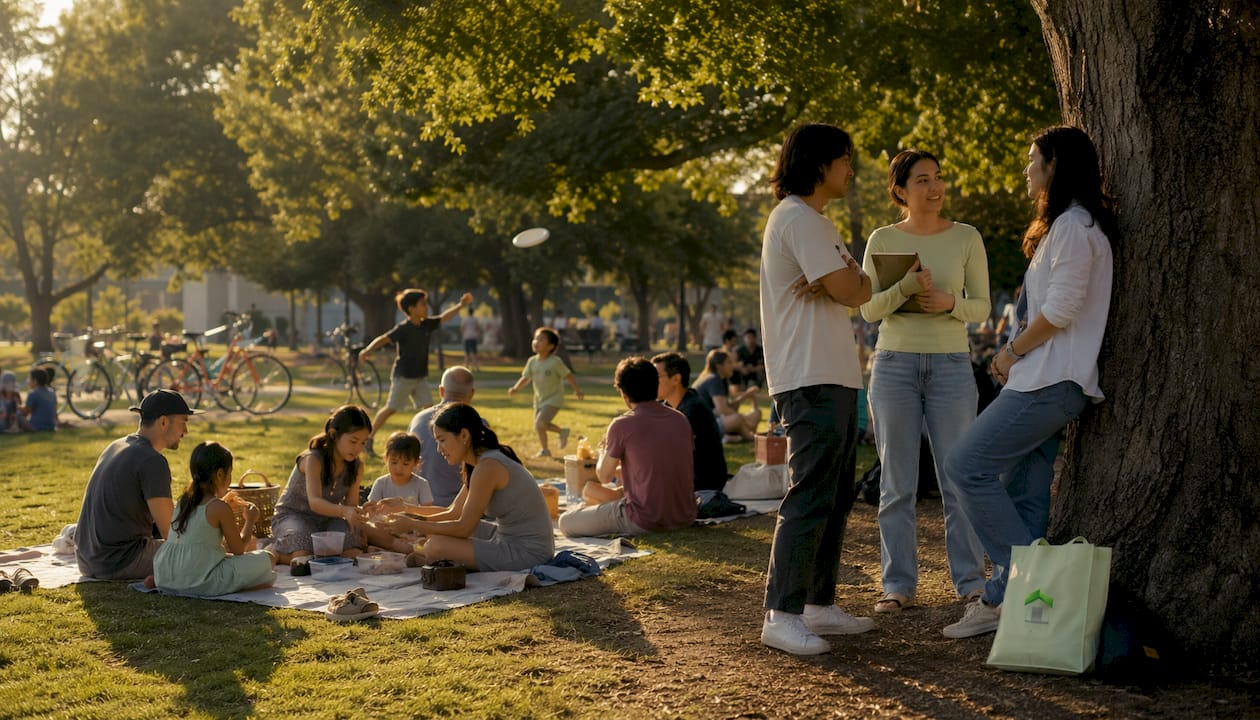
Neighborhood profiles at a glance
| Neighborhood | Best For | Character | Transit Access |
|---|---|---|---|
| North Berkeley / Gourmet Ghetto | Families, professionals | Quiet, walkable, upscale | North Berkeley BART |
| Elmwood | Families, long-term residents | Residential, charming, stable | Bus to Downtown Berkeley BART |
| Rockridge border (South Berkeley) | Commuters, young professionals | Mixed, transitional, improving | Rockridge BART (Oakland) |
| South/Southwest Berkeley | Budget-conscious families, investors | Diverse, more affordable | Ashby BART |
| Telegraph / UC-adjacent | Students, young renters | Dense, lively, noisy | Downtown Berkeley BART |
| West Berkeley | Artists, light-industrial workers | Industrial-residential mix | Bus lines, limited BART walk |
What to expect by area
North Berkeley and the Gourmet Ghetto sit at the top of most family wish lists. Streets are quieter, the housing stock leans toward Craftsman bungalows and larger homes, and the neighborhood has a genuine community feel. Rents for a 2-bedroom here typically run toward the higher end of the city range. North Berkeley BART station makes the commute to San Francisco manageable.
Elmwood borders Oakland’s Rockridge neighborhood and offers some of Berkeley’s most stable, residential streets. It’s popular with families who want a neighborhood feel without the campus energy. Bus connections to Downtown Berkeley BART are reliable, though the walk to a BART station is longer than in North Berkeley.
South and Southwest Berkeley offer more accessible price points. Southwest Berkeley in particular has seen growing interest from buyers and renters who want Berkeley’s amenities without the premium of the northern neighborhoods. Ashby BART station serves this area. Multi-unit properties and duplexes are more common here, which also makes it attractive for investors.
Telegraph Avenue and the UC-adjacent area suit students and younger renters who want to be close to campus, restaurants, and nightlife. Expect noise, density, and a faster-moving rental market. Families with school-age children generally look elsewhere.
West Berkeley is a mixed-use area with a growing arts and maker community. It’s less residential than other parts of the city, but rents can be lower and the neighborhood has its own character.
Typical rent ranges across the city
Numbeo’s June 2026 data shows a 1-bedroom in the city center averaging around $2,360/month, with outside-center units closer to $2,215/month. A 3-bedroom in the city center runs approximately $4,860/month. These figures shift by neighborhood, with North Berkeley and Elmwood typically at or above the city-center average, and South/Southwest Berkeley running somewhat below.
Pro Tip: Pair your neighborhood shortlist with your commute destination. If you’re heading to San Francisco daily, proximity to a BART station matters more than it might seem on a map. A 10-minute walk to BART adds up over time.
What does the Berkeley housing market actually look like right now?
Berkeley’s housing market is competitive and expensive. Knowing what to expect before you start searching saves time and prevents costly missteps.
Renting in Berkeley
Wise’s 2026 cost-of-living data puts the average 1-bedroom city-center rent at $2,360/month as of June 2026 (Numbeo). Utilities add roughly $180/month, and internet runs around $78/month. For a 2-bedroom, expect to pay meaningfully more, with prices varying by neighborhood and unit condition.
The rental application process in Berkeley is competitive. Landlords typically require proof of income (usually 2.5–3x monthly rent), recent pay stubs or bank statements, a credit check, and references. Strong applications move quickly. In popular neighborhoods, well-priced units can receive multiple applications within 48 hours of listing.
Typical rental search timeline:
| Stage | Timeframe |
|---|---|
| Begin active search | 60–90 days before target move date |
| Shortlist and tour units | 4 weeks before move |
| Submit application | Within 24–48 hours of a strong showing |
| Lease signing and deposit | 1–2 weeks after approval |
| Move-in | Per lease start date |
Berkeley has strong renter protections. Rent stabilization applies to many units built before 1980, and the city’s Rent Stabilization Board governs allowable increases and eviction rules. Confirm whether a unit falls under rent control before signing.
Buying in Berkeley
Berkeley’s purchase market is among the most competitive in the Bay Area. Homes frequently receive multiple offers, and buyers who are pre-approved and prepared to move quickly have a clear advantage. For buyers weighing property types, a comparison of condo vs. house ownership is worth reviewing before you start touring.
A typical buying timeline runs 60–90 days from pre-approval to close, assuming you find the right property within the first few weeks of active searching. In a competitive market, that window can extend. Inspection contingencies are common but sometimes waived in highly competitive offer situations. Work with an agent who knows the local norms before making that call.
Pro Tip: Get pre-approved before you start touring homes, not after. In Berkeley’s market, sellers and their agents take pre-approved buyers more seriously, and you’ll be ready to move when the right property appears. Kenneth Hogan’s team can connect you with lenders who know the local market.
Housing costs are the consistent primary driver of Berkeley’s overall cost of living, making early planning and flexible neighborhood choices the most effective ways to manage your budget.
What do families need to know about Berkeley schools and childcare?
Schools are often the deciding factor for families relocating to Berkeley. The structure of the Berkeley Unified School District is different from what most people expect, and understanding it early prevents real frustration.
How BUSD’s assignment system works
Berkeley Unified School District uses a centralized student assignment system, which means your home address does not automatically determine which school your child attends. Families submit ranked preferences during an enrollment round, and the district assigns students based on a combination of factors including sibling priority, socioeconomic diversity goals, and availability.
This matters for your housing decision. Choosing a neighborhood based on a specific school’s reputation does not guarantee placement there. Instead, families who understand the system tend to focus on district-wide programs, magnet options, and the overall quality of BUSD rather than a single school address.
Enrollment checklist for families
- Check BUSD’s enrollment calendar. Open enrollment rounds typically run in late winter/early spring for the following school year. Missing the window means waiting for a later round with fewer options.
- Gather required documents early. Proof of Berkeley residency, immunization records, and birth certificate are standard requirements.
- Research magnet and special programs. BUSD offers several district-wide programs with distinct academic focuses. These are worth exploring before you submit your preference list.
- Attend school tours. BUSD and individual schools typically hold open houses in the fall and winter. These are the best way to evaluate fit before the enrollment round.
- Plan for the assignment outcome. Have a backup plan if your first-choice school isn’t assigned. Many families find that their second or third choice works well once they visit.
Childcare in Berkeley
Childcare availability in Berkeley is limited relative to demand, particularly for infants and toddlers. Waitlists at popular centers can run 12–18 months. If you’re moving with young children, start researching childcare options before you finalize your move date.
Preschool co-ops are a practical and cost-effective option in Berkeley. Several well-established co-ops operate in the city, and they tend to have strong community networks. Licensed childcare centers, family daycare homes, and UC Berkeley’s on-campus childcare resources are also available, though campus programs prioritize UC-affiliated families.
Pro Tip: If childcare is a priority, treat it like housing: start your search early, get on multiple waitlists simultaneously, and have a short-term backup plan (a family daycare home or a part-time co-op slot) while you wait for your preferred option.
How do you get around Berkeley, and how long does the commute to San Francisco take?
Berkeley’s transit infrastructure is one of its genuine strengths. For many residents, it makes car-free or car-light living a realistic choice.
Your main transit options
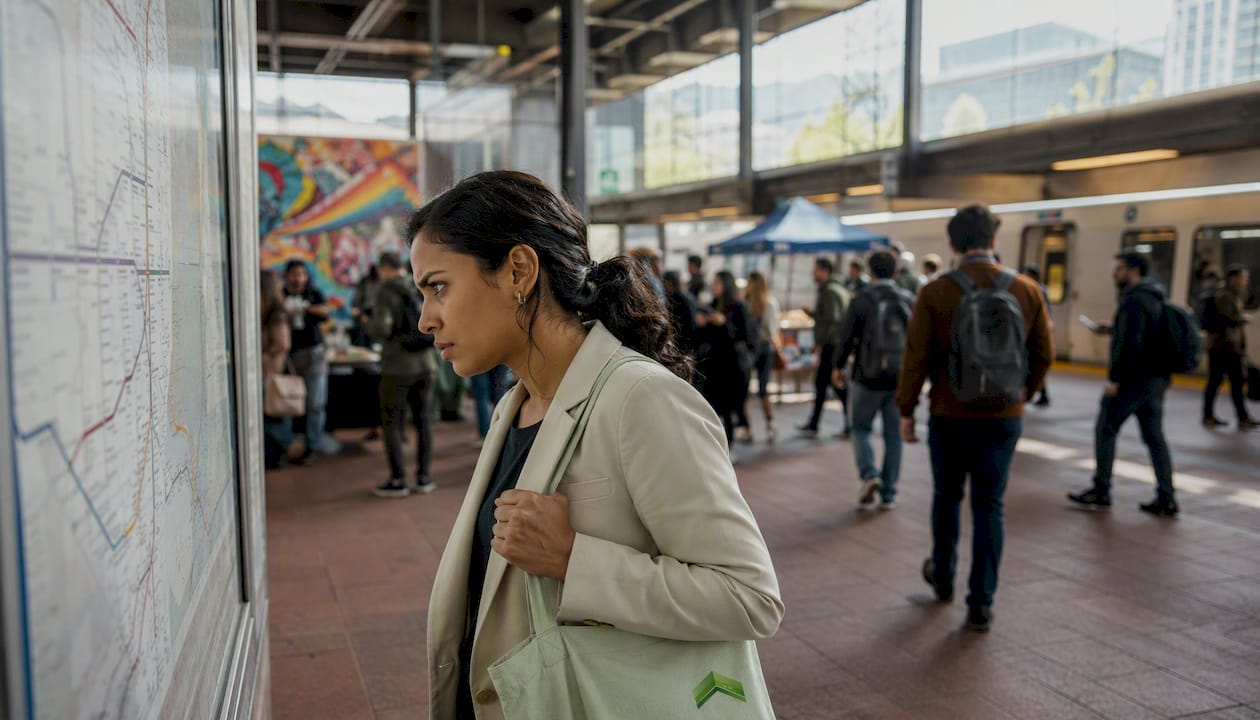
- BART (Bay Area Rapid Transit). Three stations serve Berkeley directly: Downtown Berkeley, North Berkeley, and Ashby. BART is the fastest way to reach downtown San Francisco, with typical travel times of 25–30 minutes from Downtown Berkeley station. Trains run frequently during commute hours.
- AC Transit buses. Alameda-Contra Costa Transit operates extensive bus service throughout Berkeley and connects to Oakland, Emeryville, and other East Bay destinations. Several lines run frequently and serve neighborhoods not directly on BART.
- Biking. Berkeley has a well-developed network of bike lanes and low-traffic bike boulevards. The terrain is flat in the western and central parts of the city, with hills rising toward the east. Many residents combine biking with BART for longer commutes.
- Driving. Parking is restricted in many neighborhoods, and traffic on I-80 and the Bay Bridge can be significant during peak hours. Driving to San Francisco during rush hour typically takes 45–75 minutes depending on conditions.
- Amtrak. The Emeryville Amtrak station, a short distance from Berkeley, connects to Sacramento, the Central Valley, and points south. It’s not a daily commuter option for most, but useful for regional travel.
Commute time estimates
- Downtown Berkeley BART to Embarcadero (San Francisco): approximately 25–30 minutes
- Downtown Berkeley BART to Oakland 12th Street: approximately 8–10 minutes
- Biking from central Berkeley to UC Berkeley campus: 10–20 minutes depending on starting point
- Driving from Berkeley to downtown San Francisco (off-peak): 30–40 minutes
- Driving from Berkeley to downtown San Francisco (peak): 45–75 minutes
A monthly BART pass or AC Transit pass runs approximately $86.70 for local transit. Combined with biking for shorter trips, this is substantially cheaper than car ownership when you factor in insurance, gas, parking, and maintenance. For single commuters, transit plus a bike often beats owning a car outright.
What should you know about safety, services, and neighborhood amenities?
Berkeley sits between Oakland and the Bay, and its safety profile varies meaningfully by neighborhood. Understanding the range helps you make a more informed choice.
Safety context
Berkeley is generally safer than Oakland in terms of overall crime rates, though it is not uniform across the city. Central and North Berkeley neighborhoods tend to have lower crime rates. South and West Berkeley, and areas near the downtown BART station, see higher rates of property crime. As with any urban area, the block-by-block picture matters more than citywide averages.
When evaluating a specific address, check the Berkeley Police Department’s public crime data and visit the neighborhood at different times of day, including evenings and weekends. What a street feels like at 10 AM on a Tuesday is different from what it feels like at 9 PM on a Friday.
Essential services
- Hospitals and urgent care. Alta Bates Summit Medical Center is Berkeley’s primary hospital. Several urgent care clinics operate throughout the city.
- Police and fire. The Berkeley Police Department and Berkeley Fire Department serve the city. Non-emergency contacts and online reporting are available through the city’s website.
- Libraries. Berkeley Public Library operates multiple branches, including the Central Branch on Kittredge Street. Library cards are free for Berkeley residents.
- Community centers. The City of Berkeley operates several community centers with programs for children, seniors, and adults.
Parks and outdoor amenities
Tilden Regional Park is the crown jewel, offering hiking, a botanical garden, a lake, and a merry-go-round that families with young children love. Cesar Chavez Park at the Berkeley Marina is excellent for kite flying and waterfront walks. Smaller neighborhood parks like Live Oak Park and Ohlone Park are well-maintained and regularly used by families.
UC Berkeley’s campus itself functions as a de facto public amenity. The Botanical Garden, the Doe Library, and the free public events calendar at UC Berkeley events are accessible to all residents.
What moving logistics do you actually need to handle before move-in day?
The practical side of moving to Berkeley has a few specific requirements that catch newcomers off guard. Getting ahead of them makes the move itself much smoother.
Permits and local rules
Moving truck curb permits are required in many parts of Berkeley when you need to reserve street space for a moving vehicle. The City of Berkeley issues these through its permit office, and you should apply at least two weeks before your move date. Failing to secure a permit can result in fines or, worse, no legal place to park the truck.
Street-sweep schedules vary by block and affect where and when you can park. Check the posted signs on your specific street before scheduling your movers. Large-item disposal (furniture, appliances) requires scheduling a bulky-item pickup through the city’s waste management service, not leaving items on the curb without notice.
Utilities and services checklist
- Electricity and gas. PG&E serves Berkeley. Set up your account online at least 1–2 weeks before move-in.
- Water. East Bay Municipal Utility District (EBMUD) handles water service. Transfer or establish service before your move date.
- Trash and compost. Berkeley has mandatory composting and recycling. Your landlord or property manager will typically set up service, but confirm this before move-in.
- Internet. Comcast/Xfinity and AT&T are the primary providers. Schedule installation 2–3 weeks in advance, as appointment availability can be limited.
- Postal forwarding. Submit a change-of-address request with USPS at least two weeks before your move.
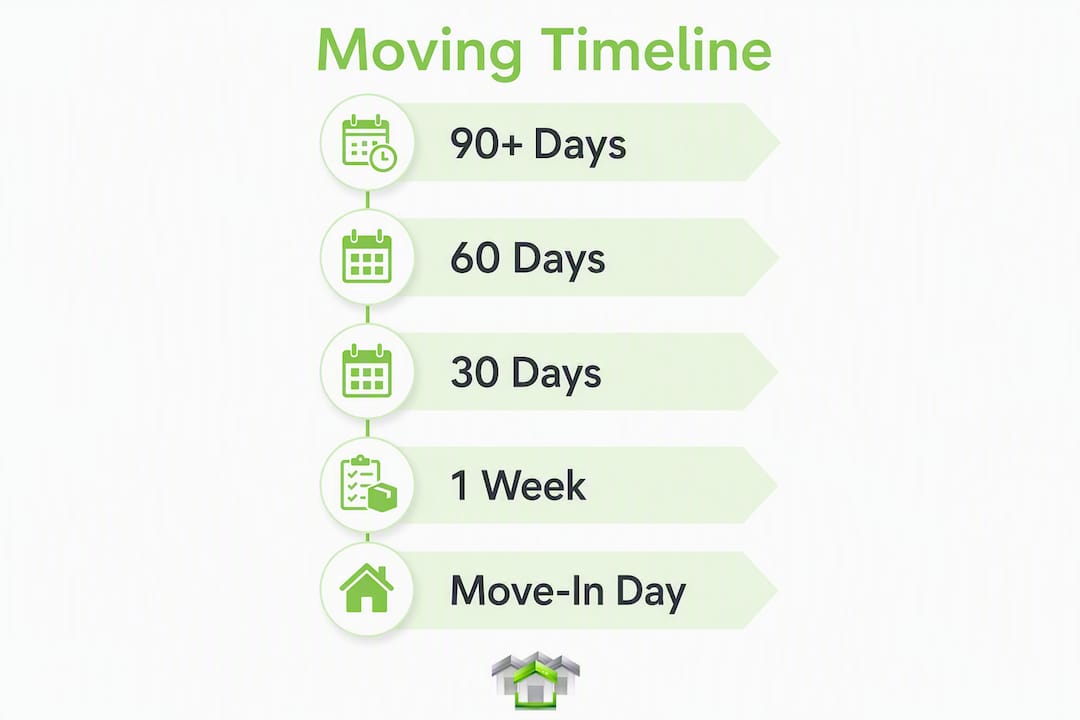
30/60/90-day moving timeline
90 days out:
- Set your housing budget and begin neighborhood research
- Contact a local agent if buying
- Start childcare or school research if applicable
60 days out:
- Begin active housing search (renting or buying)
- Apply for childcare waitlists
- Research BUSD enrollment timeline if you have school-age children
30 days out:
- Secure lease or close on purchase
- Apply for moving truck curb permit from the City of Berkeley
- Set up PG&E, EBMUD, and internet accounts
- Schedule movers and confirm parking/access logistics
Move week:
- Confirm permit is posted and visible
- Notify USPS of address change
- Register for residential parking permit if your neighborhood requires one
- Set up trash/compost service with your property manager
How do you choose the right Berkeley neighborhood for your household?
Choosing a neighborhood is less about finding the “best” one and more about matching your specific priorities to what each area actually offers. A structured approach gets you to a shortlist faster.
Priority checklist
Work through these before you start touring:
- Budget. What’s your firm monthly maximum for rent or mortgage? Be honest about what’s sustainable, not just possible.
- School assignment. If you have school-age children, research BUSD’s current assignment round and which programs have availability. Don’t assume proximity equals placement.
- Commute destination. Map your primary workplace from each neighborhood you’re considering. Factor in BART walking distance, not just driving time.
- Walkability needs. Do you want to walk to groceries, restaurants, and parks daily? Central and North Berkeley deliver this. Outer neighborhoods require more driving.
- Noise tolerance. Telegraph Avenue and the UC-adjacent area are lively. If quiet evenings matter, look at Elmwood or North Berkeley.
- Yard and parking needs. Single-family homes with yards and driveways are more common in North Berkeley and Elmwood. Duplexes and apartments dominate the UC-adjacent and South Berkeley areas.
Questions to ask on neighborhood visits
- Walk the block at different times. What’s the foot traffic like at 7 PM on a weekday?
- Check the nearest grocery store, pharmacy, and park. Are they walkable or a drive?
- Time the actual commute from the front door to your workplace, not just the BART-to-office leg.
- Talk to a neighbor if you can. Ask what they like and what they’d change.
- Look for posted street-sweep signs, parking permit zones, and any construction activity nearby.
Red flags to note
- Units priced significantly below market with no clear explanation
- Landlords who resist providing a written lease or who are vague about rent control status
- Neighborhoods where most storefronts are vacant or where foot traffic drops sharply after dark
- Properties with deferred maintenance that the landlord attributes to “cosmetic only” issues
Once you’ve worked through this list, you should be able to narrow to 2–3 neighborhoods worth visiting in person. From there, the decision usually becomes clearer quickly.
What does a Berkeley agent actually see that the listings don’t show you?
Kenneth Hogan has worked Berkeley’s residential market for over 20 years, representing buyers, sellers, first-time homebuyers, and investors across the city’s neighborhoods. That depth of local experience shows up in the details: knowing which blocks in South Berkeley are appreciating faster than the listings suggest, understanding how BUSD assignment rounds have shifted in recent years, and reading a competitive offer situation accurately enough to advise on strategy without overreaching.
On timing and preparation: The buyers who succeed in Berkeley’s market are almost always the ones who started earlier than they thought they needed to. Pre-approval in hand, neighborhood shortlist ready, and a clear sense of their non-negotiables. The market doesn’t wait for you to get comfortable with the process.
Here are three scenarios that come up regularly:
- The first-time buyer who underestimates the offer process. Berkeley homes often receive multiple offers within days of listing. Buyers who haven’t reviewed comparable sales, don’t have a pre-approval letter ready, or are waiting to “see a few more places” routinely lose out on properties that were right for them. Getting first-time homebuyer guidance early in the process changes that outcome.
- The family that picks a neighborhood for the school. BUSD’s centralized assignment means the neighborhood and the school are separate decisions. Families who understand this early can focus on finding the right home first, then navigate the enrollment process with realistic expectations.
- The renter considering a condo purchase. Berkeley’s condo market offers entry points that are often more accessible than single-family homes, particularly near campus and in South Berkeley. Many renters who assumed ownership was out of reach find that a condo purchase pencils out better than continuing to rent, especially with the right financing structure.
Actionable steps you can take now:
- Launch your housing search 60–90 days before your target move date, not 30.
- Get pre-approved before you tour homes if you’re buying.
- Contact Kenneth Hogan’s team to get a current read on inventory and pricing in your target neighborhoods before you commit to a search strategy.
Key Takeaways
Moving to Berkeley rewards preparation: early housing research, a realistic budget, and a clear understanding of BUSD’s enrollment system are the three factors that most consistently determine how smoothly the move goes.
| Point | Details |
|---|---|
| Budget realistically | A single person needs roughly $4,183/month; a family of four around $9,210/month, with housing as the primary driver. |
| Start housing search early | Begin 60–90 days before your target move date; well-priced units move within 24–48 hours of listing. |
| Understand BUSD enrollment | The centralized assignment system means your address doesn’t guarantee your preferred school; research enrollment rounds before choosing a neighborhood. |
| Secure moving permits | Apply for a City of Berkeley moving truck curb permit at least two weeks before your move date to avoid fines. |
| Work with a local agent | Kenneth Hogan offers over 20 years of Berkeley market expertise for buyers, sellers, and first-time homebuyers. |
What newcomers to Berkeley consistently overlook
Most people moving to Berkeley do their homework on housing costs and transit. What they miss tends to be smaller but consequential.
The first is the gap between choosing a neighborhood and choosing a school. We see it regularly: a family picks a street in North Berkeley because they’ve heard the nearby elementary school is excellent, then discovers during the BUSD enrollment round that assignment doesn’t work that way. The school may be excellent. The assignment may not go their way. Understanding this before you sign a lease gives you real flexibility in your housing search.
The second is permit timing. Berkeley enforces its moving truck curb permit rules. Movers who show up without one either park illegally and risk a fine, or scramble to find a legal spot that adds time and stress to an already demanding day. Two weeks’ lead time is enough. Most people just don’t know to ask.
The third is the value of visiting neighborhoods at multiple times of day. A block near Telegraph Avenue that feels fine on a Saturday afternoon can feel very different on a Thursday night during the academic year. A street in West Berkeley that seems quiet at noon may have significant truck traffic at 7 AM. One visit is a snapshot. Two or three visits at different times give you the real picture.
After you move in, join your neighborhood’s listserv or Nextdoor group within the first week. You’ll learn about street-sweep schedule changes, local events, and neighborhood concerns faster than any other channel. Register at a Berkeley Public Library branch early too. It’s free, the collections are strong, and it connects you to community programming you won’t find anywhere else.
Kenneth Hogan is ready to help you find the right home in Berkeley
Buying or selling a home in Berkeley is one of the most significant financial decisions you’ll make, and the local market has enough nuance that having the right agent genuinely changes outcomes. Kenneth Hogan brings over 20 years of Berkeley and Greater Bay Area expertise to every transaction, with deep knowledge of neighborhood pricing, offer strategy, and the specific dynamics of Berkeley’s competitive market.

Whether you’re a first-time buyer trying to understand how to structure a competitive offer, a family weighing neighborhoods against BUSD enrollment options, or an investor evaluating duplex and multi-unit properties, Kenneth Hogan’s team provides the market insight and hands-on support to move forward with confidence. Seller services include pricing strategy, marketing, and negotiation support designed to attract both local and regional buyers.
Ready to take the next step? Visit Kenneth Hogan’s residential real estate page to learn more about available services or to get in touch directly. The earlier you connect with a local agent, the better positioned you’ll be when the right property appears.
Useful sources and where to get official information
These are the primary sources to check for current rules, enrollment dates, and permit requirements. Rules change, and the official pages are always more reliable than secondhand summaries.
- Berkeley Unified School District Admissions. The official source for enrollment timelines, required documents, and the centralized assignment process. Check here before making any neighborhood decision based on school access.
- City of Berkeley Permit Office. Where to apply for moving truck curb permits and check current parking and street-use rules. Apply at least two weeks before your move date.
- UC Berkeley Relocation Information. Useful for anyone relocating for a UC Berkeley position. Covers housing resources, relocation expense policies, and campus-linked services.
- UC Berkeley On-Campus Childcare. Information on childcare options affiliated with UC Berkeley. Priority goes to UC-affiliated families, but the site outlines availability and application steps.
- UC Berkeley Events Calendar. A practical resource for discovering free and low-cost public events on campus, from lectures to performances.
- Kenneth Hogan Residential Real Estate. For buyers, sellers, and movers who want local agent support in Berkeley and the Greater Bay Area. A direct contact resource if you have questions about the current market.
Always verify permit deadlines, enrollment dates, and fee amounts directly with the issuing agency before acting. These details update regularly, and the official pages reflect the current rules.
Recommended
- Home Staging Tips to Help Your Property Sell Quickly and For Top Dollar – Kenneth Hogan Realtor – Compass
- Real Estate Agent Services in Berkeley, CA | Kenneth Hogan
- Blog – Kenneth Hogan Realtor – Compass
- How to Navigate Fluctuating Interest Rates as a Homebuyer or Seller – Kenneth Hogan Realtor – Compass