


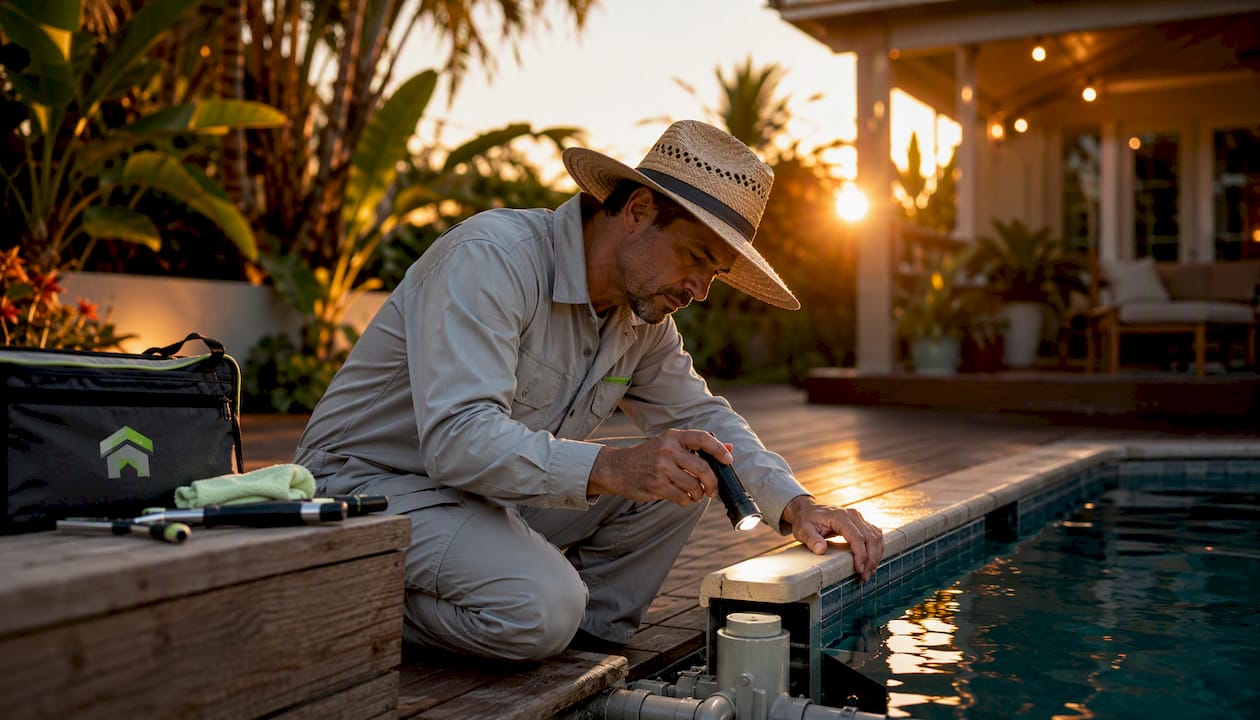
A home inspection in California is not legally required by the state for most residential transactions, but skipping one is a risk few buyers can afford. A qualified inspector will examine the property’s major systems and deliver a written report, typically within a couple of days, giving you documented grounds to negotiate repairs, request credits, or walk away. Budget $400–$600 for a standard single-family home inspection, with Bay Area properties often landing at the higher end and add-ons pushing costs further.
Here is what to do right now:
- If you are under contract: Request an inspection contingency in your purchase agreement and schedule an inspector within the first few days of your contingency period.
- If you are selling: Consider a pre-listing inspection to surface issues before buyers do, giving you time to price accurately or make targeted repairs.
- Legal note: California’s Business & Professions Code, Chapter 9.3 (Sections 7195–7199), governs home inspectors in the state, defining what an inspection must cover, what inspectors cannot do, and how long you have to bring a claim.
- Agent disclosure is not a substitute: Your agent must perform a reasonably competent visual inspection and disclose material facts, but that duty does not replace a paid, professional inspection.
Table of Contents
- What does a home inspection in California actually cover?
- Are home inspectors licensed or regulated in California?
- How much does a home inspection cost in California?
- How do you choose a qualified home inspector in California?
- What inspectors won’t do and when you need a specialist
- Should you waive the inspection contingency in California?
- How to use the inspection report after you receive it
- Bay Area and Berkeley inspection pitfalls you should know about
- Key Takeaways
- A local perspective on how inspections actually work
- Ready to coordinate your inspection? Kenneth Hogan can help.
- Authoritative sources and references
What does a home inspection in California actually cover?
California law defines a home inspection as a noninvasive, physical examination performed for a fee to identify material defects in a 1–4 unit residential dwelling. The inspector visually surveys readily accessible systems and components. They do not open walls, move furniture, or perform any destructive testing.
Both the California Real Estate Inspection Association (CREIA) and the American Society of Home Inspectors (ASHI) publish Standards of Practice that define the accepted scope. Under those standards, a general inspection typically covers:
- Structure: Foundation, framing, basement or crawl space, attic framing
- Roof: Covering materials, flashing, gutters, downspouts, skylights
- Exterior: Siding, trim, grading, drainage, driveways, walkways, attached decks and balconies
- Plumbing: Visible supply and drain lines, water heater, fixtures, hose bibs
- Electrical: Service panel, visible wiring, outlets, switches, GFCI and AFCI protection
- HVAC: Heating and cooling equipment, ductwork, filters, thermostats
- Interior: Walls, ceilings, floors, doors, windows, stairs, railings
- Basic safety features: Smoke detectors, carbon monoxide detectors, handrail conditions
Pool and spa properties carry an additional statutory requirement. When a property has a pool or spa, the inspector’s report must identify which of the seven state-defined drowning-prevention features are present and must note when fewer than two are present. This is a legal mandate under California’s home inspection statute, not optional.
What the inspection will not cover
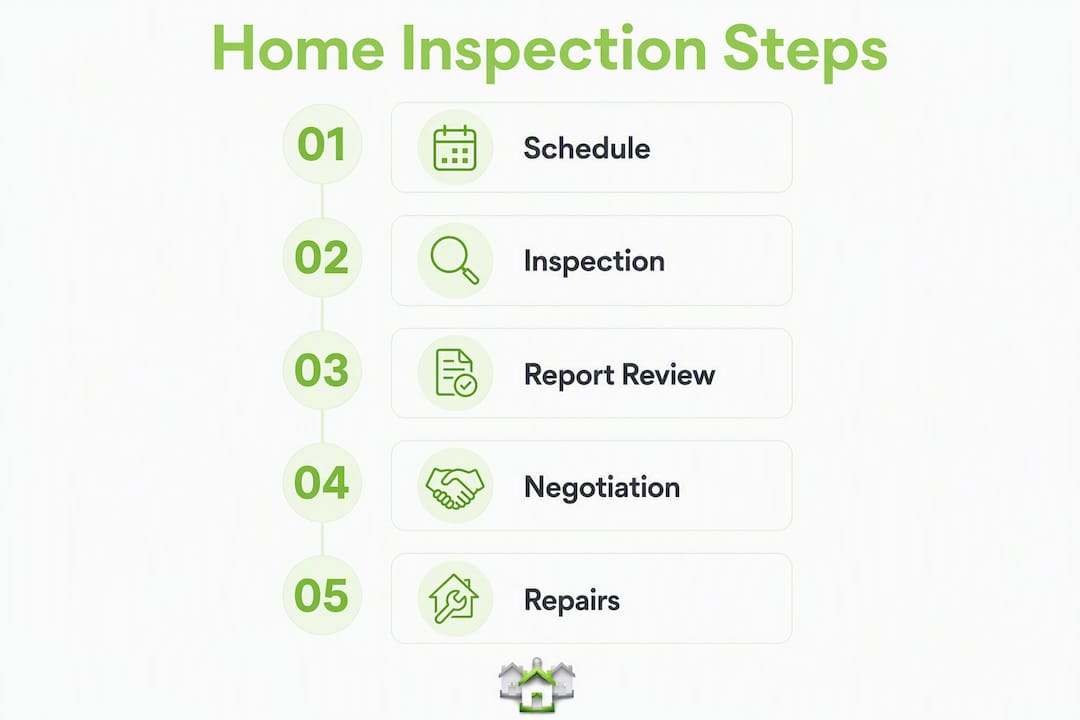
Standard inspections have clear limits. Inspectors will not move personal property, access areas that are locked or blocked, or perform any action that could damage the home. Hidden defects behind finished walls, underground utilities, and conditions that require specialized equipment are outside the standard scope.
Common add-ons worth budgeting for:
- Sewer scope: Camera inspection of the lateral sewer line ($150–$300 typical)
- Termite / wood-destroying organism (WDO) report: Required by many lenders; performed by a licensed structural pest control inspector
- Mold testing: Air or surface sampling when visible staining or musty odors are present
- Roof tech access: Drone or infrared scan when the roof is not safely walkable
- HVAC scope: Detailed evaluation of older or complex systems beyond the general inspection
CREIA’s Standards make clear that inspections are intended to inform decisions about repairs or further evaluations, not to replace specialists or perform technical audits.
Are home inspectors licensed or regulated in California?
California does not require home inspectors to hold a broad state-issued license. Industry licensing maps confirm California’s position: inspectors are not subject to a statewide licensing exam or continuing education mandate the way contractors or real estate agents are. That makes voluntary credentials and trade-practice law more important, not less.

What the Business & Professions Code does require
California’s Business & Professions Code, Chapter 9.3 (Sections 7195–7199), establishes the legal framework for home inspectors in the state. Key provisions include:
- Definition and scope: A home inspection is defined as a noninvasive physical examination of a 1–4 unit residential property performed for a fee to identify material defects.
- Report requirements: The written report must identify material defects and, for properties with a pool or spa, must document which of the seven drowning-prevention features are present.
- Conflict-of-interest prohibition: BPC Section 7197 prohibits an inspector from performing repair work on any property they inspected within the previous 12 months. This removes a direct financial incentive to flag problems the inspector then profits from fixing.
- Statute of limitations: California law establishes a four-year statute of limitations for legal actions arising from a home inspection report. Keep your report and all written communications with the inspector for at least that long.
The agent’s role versus the inspector’s role
California real estate agents must perform a “reasonably competent and diligent visual inspection” of 1–4 unit residential properties and disclose material facts to buyers. That duty is separate from, and not a substitute for, a paid professional inspection. An agent’s visual walk-through does not carry the same depth, documentation, or legal accountability as a formal inspection report.
The practical implication for buyers: Because California has no mandatory inspector licensing, your only reliable filters are voluntary certifications (CREIA, ASHI), insurance coverage, and the protections built into the BPC. Verify all three before you book.
How much does a home inspection cost in California?
Pricing varies by property size, age, region, and the number of add-ons you order. Bay Area and Berkeley properties consistently run at the higher end of state ranges, partly because of older housing stock and the complexity of hillside or multi-unit properties.

| Property Type | Typical Inspection Fee | Notes |
|---|---|---|
| Small single-family | $400–$600 | Condo or small bungalow; shorter on-site time |
| Standard single-family | $400–$600 | Most common Bay Area purchase |
| Large home or multi-unit | — | Duplex or larger adds time and complexity |
| Sewer scope (add-on) | $150–$300 | Strongly recommended for homes over 30 years old |
| Mold testing (add-on) | — | Air sampling plus lab analysis |
| Termite / WDO report (add-on) | $100–$150 | Often required by lenders; separate licensed inspector |
| Pool / spa inspection (add-on) | $150–$300 | Statutory pool-safety reporting included |
Ranges are estimates based on market data and may vary by inspector and location.
The inspection timeline
- Scheduling: Most inspectors can accommodate within about a week of contact. In active Bay Area markets, booking early in your contingency period is critical.
- On-site inspection: Typically a few hours for a standard single-family home; larger or older properties take longer.
- Written report delivery: Most inspectors deliver a full written report within 24–48 hours of the inspection.
- Contingency fit: California purchase contracts commonly allow a period of days for the inspection contingency. The inspection, report review, and any specialist follow-up should all complete within that window.
Who pays? The buyer almost always orders and pays for the general inspection during the contingency period. Sellers who order a pre-listing inspection pay for it themselves, often as part of a strategy to price accurately and reduce renegotiation risk after an offer is accepted.
How do you choose a qualified home inspector in California?
Because California has no mandatory licensing, the vetting process falls entirely on you. A few structured steps make it straightforward.
Credential and insurance checklist
- CREIA membership: CREIA members commit to the association’s Standards of Practice and Code of Ethics. Look for the CREIA designation on the inspector’s website or ask directly.
- ASHI membership: ASHI-certified inspectors have passed a national exam and completed a minimum number of paid inspections. Both CREIA and ASHI memberships signal a baseline of professional accountability.
- Errors and omissions (E&O) insurance: Covers you if the inspector misses a material defect. Non-negotiable.
- General liability insurance: Protects against property damage during the inspection.
- Years of experience: Ask how many inspections they have completed, not just how long they have been in business.
- Sample report: Request one before booking. A good report is specific, includes photos, and clearly distinguishes safety hazards from maintenance items.
Questions to ask when you call
- “Are you a CREIA or ASHI member, and can you provide proof of E&O and general liability insurance?”
- “Can you send me a sample report from a similar property type?”
- “What is your turnaround time for the written report, and do you offer a sewer scope or thermal imaging?”
Pro Tip: CREIA’s website and ASHI’s “Find an Inspector” tool both let you search by zip code and verify membership status in under two minutes. Run that check before you call, so you are confirming details rather than starting from scratch.
Red flags to watch for
- No proof of E&O or general liability insurance
- Offers to perform repairs on the property they just inspected (a direct violation of BPC Section 7197)
- Vague or template-heavy sample reports with no photos
- Unusually low price with no references or verifiable credentials
- Pressure to book immediately without answering your questions
What inspectors won’t do and when you need a specialist
A general home inspection is a starting point, not a final answer on every system in the house. ASHI’s Standard of Practice is explicit: inspectors will not move personal property, access areas that are not readily accessible, or perform any action that could damage the home. Hidden defects, buried systems, and technically complex components fall outside the standard scope.
Standard exclusions include:
- Defects concealed behind finished walls, ceilings, or floors
- Underground plumbing, sewer laterals, or buried fuel tanks
- Areas that are locked, blocked, or otherwise inaccessible on the day of inspection
- Determination of remaining useful life for any system or component
- Code compliance analysis or permit history review
When to call a specialist
Certain findings in a general inspection report should trigger a specialist call before you remove your contingency:
- Water stains, cracks in the foundation, or uneven floors: Order a structural engineer’s evaluation, especially on hillside Berkeley properties.
- Slow drains or sewer odors, or any home over 30 years old: Schedule a sewer scope. Older clay or cast-iron laterals in the Bay Area fail without warning.
- Evidence of termite damage or wood rot: A licensed structural pest control inspector provides the WDO report lenders often require and can scope the extent of damage.
- Mold staining or persistent musty odors: An industrial hygienist or certified mold inspector can test air quality and identify the moisture source.
- Aging electrical panels (Federal Pacific, Zinsco brands) or knob-and-tube wiring: A licensed electrician’s assessment is worth the cost before closing.
Specialist reports differ from a general inspection in one important way: they are typically more technical, narrower in scope, and may include repair cost estimates. Budget $200–$600 per specialist depending on the scope, and factor that into your contingency timeline.
Should you waive the inspection contingency in California?
In competitive Bay Area markets, buyers sometimes waive inspection contingencies to make their offers more attractive. It is a real trade-off, and the decision deserves careful thought.
Why buyers waive
- To compete against multiple offers in a low-inventory market
- When the seller has already provided a pre-listing inspection report
- When the buyer is an investor purchasing a property with known deferred maintenance
The risks of waiving
- No contractual right to cancel based on inspection findings
- Full financial exposure to undisclosed or undiscovered defects
- Safety hazards (faulty wiring, gas leaks, structural issues) that become your problem at closing
Alternatives to a full waiver
- Pre-offer inspection: Some sellers allow buyers to inspect before submitting an offer, removing the need for a contingency entirely.
- Shortened contingency window: Offer a 7-day rather than 17-day inspection period to signal confidence while preserving your right to cancel.
- Escrow holdback: Negotiate a dollar amount held in escrow until a specific repair is completed post-closing.
- Seller credit: Request a price reduction or closing cost credit in lieu of repairs.
Never waive an inspection on a property with: visible foundation cracks, a pool or spa, evidence of water intrusion, older electrical systems, or any home built before 1980 with no documented renovation history. The financial exposure in those cases almost always outweighs the competitive advantage of waiving.
How to use the inspection report after you receive it
The report is a negotiating tool, not just a document to file away. Here is a practical workflow for first-time buyers and experienced buyers alike.
- Review the report with your agent the same day it arrives. Identify items flagged as safety hazards or material defects first. Cosmetic issues and routine maintenance items are secondary.
- Separate the list into three categories: safety/major defects, significant deferred maintenance, and minor items you will handle yourself.
- Get specialist bids for major items before submitting a repair request. A structural engineer’s letter or a plumber’s written estimate gives your request credibility and a specific dollar figure.
- Write a focused repair request. Limit it to safety hazards and material defects. A request that lists many items signals inexperience and often produces less cooperation from sellers.
- Choose your ask: repairs, credit, or price reduction. Repairs completed by the seller before closing carry execution risk. A credit or price reduction gives you control over the work after closing.
- Negotiate or remove the contingency within your contract window. California contracts typically give sellers 5–7 days to respond to a repair request. If you cannot reach agreement, you have the right to cancel and recover your deposit while the contingency is active.
What a focused repair request looks like
- Item: Main electrical panel — double-tapped breakers identified. Request: Seller to provide licensed electrician’s repair or $800 credit.
- Item: Sewer lateral — root intrusion confirmed by scope. Request: Seller to repair lateral or provide $4,500 credit.
- Item: Water heater — no seismic strapping present. Request: Seller to strap per California code or provide $150 credit.
Preserve your full inspection report and all written communications. California’s four-year statute of limitations means you may have legal recourse for missed material defects well after closing.
Bay Area and Berkeley inspection pitfalls you should know about
National inspection guides do not cover what makes Berkeley and the broader Bay Area genuinely different. Local buyers face a specific set of risks that a good inspector and the right specialists can surface before closing.
Common local defects to watch for
- Hillside foundation concerns: Many Berkeley hills properties sit on cripple walls, which are short wood-framed walls between the foundation and the first floor. Without seismic retrofitting, these are a significant earthquake vulnerability. Ask your inspector specifically about cripple wall bracing.
- Clay soils and drainage: Expansive clay soils throughout the East Bay cause foundation settlement and drainage problems that worsen over decades. Uneven floors and sticking doors are often the first visible signs.
- Galvanized plumbing: Homes built before the 1970s frequently have galvanized steel supply pipes that corrode from the inside out, reducing water pressure and eventually failing. A plumber’s assessment is worth ordering if the inspector flags galvanized supply lines.
- Older sewer laterals: Much of Berkeley’s sewer infrastructure dates to the early 20th century. Clay tile laterals are common and prone to root intrusion and collapse. A sewer scope is close to mandatory on any pre-1980 Berkeley home.
- Seismic retrofit status: Check whether the property has a documented soft-story or cripple-wall retrofit. Some Berkeley neighborhoods have higher retrofit rates than others, and the presence or absence of a permit can affect insurance costs.
Timing in a tight Bay Area market
Inspector and specialist availability can compress your contingency window in ways buyers from other markets do not expect. Structural engineers in the Bay Area often book 5–10 days out. If your contract allows only 10 days for inspections, you may need to schedule the general inspection on day one and the structural engineer simultaneously, not sequentially.
Pro Tip: Before you make an offer on a Berkeley or East Bay property, ask your agent for a short list of inspectors and structural engineers who are familiar with local construction styles and can turn around reports quickly. Having that list ready before you are in contract saves two to three days of contingency time.
Coordinating a pre-listing inspection on the seller side follows the same logic: knowing the local defect profile in advance lets sellers address issues strategically rather than reactively.
Key Takeaways
A home inspection in California is not legally required, but it is the most reliable tool buyers have to identify material defects, negotiate repairs, and protect their investment before closing.
| Point | Details |
|---|---|
| Not required, but critical | California law does not mandate inspections, but they are the buyer’s primary protection against undisclosed material defects. |
| Know the legal framework | BPC Chapter 9.3 governs inspectors: no state license required, 12-month repair ban, and a four-year statute of limitations on claims. |
| Budget realistically | Standard inspections in the Bay Area typically run within a moderate price range; add-ons (sewer scope, mold, WDO) can add additional costs. |
| Verify credentials carefully | Confirm CREIA or ASHI membership plus E&O and general liability insurance before booking any inspector. |
| Kenneth Hogan | Kenneth Hogan coordinates inspections, reviews reports with buyers, and manages post-inspection negotiations throughout Berkeley and the Greater Bay Area. |
A local perspective on how inspections actually work
Most buyers come into the inspection process thinking the report will give them a clean yes or no on the property. It rarely does. What a good inspection actually delivers is a prioritized picture of the property’s condition, and knowing how to read that picture is where a knowledgeable local agent earns their place in the transaction.
In our experience working with buyers across Berkeley and the East Bay, the inspection report is almost never the end of the conversation. It is the beginning of a focused negotiation. The buyers who get the best outcomes are the ones who go into that negotiation with specific bids, not just a list of concerns. A structural engineer’s letter that says “cripple wall retrofit required, estimated cost $12,000–$18,000” carries far more weight than a repair request that says “foundation concerns noted.”
We have seen buyers walk away from properties that looked fine on paper because a sewer scope revealed a collapsed lateral that would have cost $30,000 to repair. We have also seen buyers confidently close on homes with long inspection reports because we helped them separate the noise from the genuine risks. The report is a tool. How you use it determines whether it protects you or paralyzes you.
One thing we tell every buyer: do not waive your inspection contingency in a competitive market without at minimum ordering a pre-offer inspection. The short-term competitive advantage of waiving is real. So is the long-term financial exposure. In a market where the median Berkeley home price runs well into the seven figures, the cost of a missed material defect dwarfs the cost of any inspection.
Ready to coordinate your inspection? Kenneth Hogan can help.
Scheduling inspectors, interpreting reports, and managing post-inspection negotiations are exactly where local expertise makes a measurable difference. Kenneth Hogan works with buyers and sellers throughout Berkeley and the Greater Bay Area, coordinating every step of the inspection process so nothing falls through the cracks during your contingency period.

Whether you are a first-time buyer trying to understand what the report means, or a seller weighing a pre-listing inspection before you list, we can help you move forward with clarity. Our services include buyer representation, pre-listing inspection coordination, contractor and specialist referrals, and full negotiation support from offer through close.
Connect with Kenneth Hogan to schedule a consultation and get the local guidance you need before your next inspection.
Authoritative sources and references
- California Business & Professions Code, Chapter 9.3, Sections 7195–7199: The primary California statute governing home inspectors. Defines “home inspection,” “material defect,” report requirements, pool/spa safety-feature reporting, and the four-year statute of limitations.
- BPC Section 7197: The specific provision prohibiting inspectors from performing repairs on any property they inspected within the previous 12 months.
- CREIA Residential Standards of Practice (2025): Defines the scope of a California home inspection, lists items that must be inspected, and establishes standard exclusions and limitations. The primary voluntary standard for California inspectors.
- ASHI Standard of Practice (2026): The national standard reinforcing that inspections are noninvasive, visual, and not exhaustive technical audits. Useful for understanding scope limitations and why specialists are often necessary.
- California DRE — Disclosures in Real Property Transactions (RE 6): Explains the agent’s separate duty to perform a reasonably competent visual inspection and disclose material facts, and why that duty does not substitute for a professional inspection.
- State-by-State Home Inspector Licensing Requirements (Spectora): Confirms California’s position as a state without a broad mandatory home inspector license, supporting the emphasis on voluntary credentials.
This article provides general information about home inspections in California and is not legal or professional advice. Confirm current statutes and requirements with the California Department of Real Estate, the California Legislature’s official code database, or a qualified real estate attorney before making decisions based on specific legal provisions.
Recommended
- Top Tips for First-Time Homebuyers: What to Know Before You Start Your Search – Kenneth Hogan Realtor – Compass
- First-Time Home Buyer Realtor Berkeley, CA | Kenneth Hogan
- How to Navigate Fluctuating Interest Rates as a Homebuyer or Seller – Kenneth Hogan Realtor – Compass
- Predicting Future Interest Rate Trends in the Real Estate Market – Kenneth Hogan Realtor – Compass