


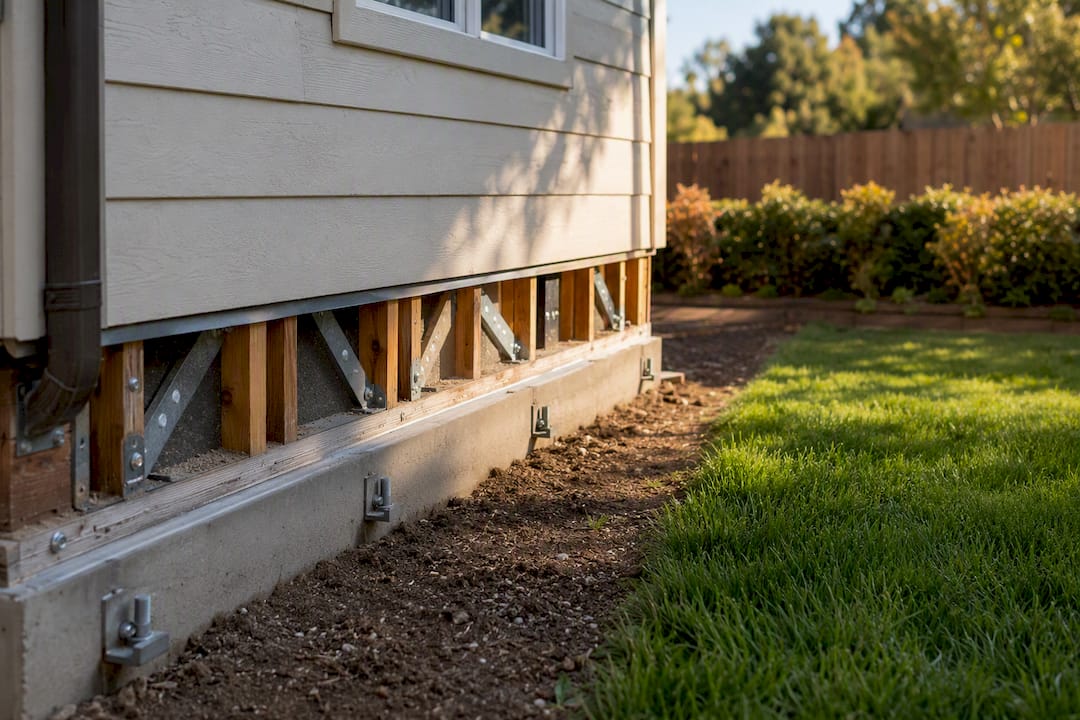
Most Bay Area homeowners should get a quote before deciding, and homeowners near active faults, in older homes, or with significant equity should strongly consider buying. Your standard homeowners policy excludes earthquake damage entirely, so this is a separate decision, not an add-on you already have.
Here’s your immediate next step:
- Run the California Earthquake Authority premium estimator using your home’s age, square footage, and foundation type.
- Ask your homeowners insurer whether they’re a CEA Participating Insurer.
- Gather retrofit documentation now if you’ve done seismic work. It affects your quote.
The California Earthquake Authority writes the large majority of residential earthquake policies in the state, and you can’t buy one directly from CEA. You buy through your existing homeowners insurer, so that phone call is where this starts.
Key Takeaways
Earthquake insurance in the Bay Area requires buying through a CEA Participating Insurer, understanding percentage-based deductibles, and prioritizing coverage based on fault proximity, home age, and equity.
| Point | Details |
|---|---|
| Buy through your insurer | CEA policies aren’t sold directly; ask if your homeowners insurer participates. |
| Deductibles are percentage-based | A 10% deductible on a $600,000 dwelling limit means $60,000 out of pocket. |
| Retrofits lower premiums | Document bolting and bracing work to present to underwriters for a better rate. |
| Condo owners stay exposed | HOA master policies can leave loss-assessment gaps; check reserve levels. |
| Insurers must offer coverage | California law requires an offer at initial purchase and every other renewal. |
Table of Contents
- Earthquake Insurance Bay Area Coverage: What’s Actually Included
- How Much Does Earthquake Insurance Cost in the Bay Area?
- Who Should Prioritize Earthquake Insurance Right Now?
- How Do You Buy Earthquake Insurance in California?
- What Should Condo and Mobile-Home Owners Check?
- Do Seismic Retrofits Lower Your Premium?
- What Happens After an Earthquake: The Claims Process
- How Insurance Status Affects Bay Area Home Sales
- What the Data Actually Tells Bay Area Homeowners
- Frequently Asked Questions
- Sources
Earthquake Insurance Bay Area Coverage: What’s Actually Included
Earthquake insurance pays for what your homeowners policy specifically excludes: shaking damage to your dwelling and belongings. Coverage generally maps to your existing Coverage A dwelling limit, meaning the earthquake policy insures your home for a comparable rebuild value. Personal property coverage protects belongings inside, though Homeowners Choice policies from CEA offer higher personal property limits than the Standard option, per CDI’s guidance.
Two coverages homeowners overlook:
- Loss of use / additional living expenses pays for temporary housing if your home becomes uninhabitable after a quake.
- Emergency repair coverage helps fund immediate fixes needed to prevent further damage, like tarping a cracked roof or shutting off a compromised gas line.
Common exclusions matter just as much. Earthquake policies don’t cover the land itself, so cracked driveways or shifted retaining walls sitting outside the dwelling often aren’t included. Vehicles need separate comprehensive auto coverage, and flooding, even quake-triggered flooding, falls under a different policy entirely. If you own a condo, your HOA’s master policy may cover the building structure while leaving you exposed for interior damage and special assessments, which we cover below.
How Much Does Earthquake Insurance Cost in the Bay Area?
Your deductible is a percentage of your dwelling coverage limit, not a flat dollar figure, and that single fact changes how you should think about cost. CEA’s policy structure offers deductibles offered at several percentage levels of the dwelling limit. On a dwelling limit with a moderate deductible means you cover a significant portion of damage personally before the policy pays out.
Premiums vary by several factors:
- Home age and construction type. Older, unreinforced structures cost more to insure than newer code-built homes.
- Foundation and soil type. Homes on soft or filled soil, common in parts of Oakland, Alameda, and the Marina District in San Francisco, carry higher risk profiles.
- Proximity to mapped fault zones. Distance from active faults like the Hayward or San Andreas directly affects pricing.
- Retrofit status and dwelling value. Verified retrofits lower premiums; higher dwelling values raise the absolute premium even at the same rate.
Bay Area premiums trend higher than statewide averages because of dense fault coverage and older housing stock. Lowering your deductible raises your premium but shrinks your out-of-pocket exposure after a major event, a tradeoff worth running through the CEA estimator rather than guessing.
Who Should Prioritize Earthquake Insurance Right Now?
Some Bay Area homeowners face a clearer case for buying than others. Run through this quick self-assessment:
- Check your risk signals. Homes near mapped fault zones (verify with USGS fault maps), built before 1980, or sitting on soft Bay Area soils face higher shaking risk.
- Check your retrofit status. No documented foundation bolting or cripple wall bracing means higher vulnerability and higher premiums.
- Check your financial exposure. Substantial home equity, a large mortgage balance, or limited emergency savings all raise the stakes of an uninsured loss.
Homeowners in newer, code-compliant construction on solid bedrock with modest equity have a weaker case for buying immediately, though “weaker” doesn’t mean “none.” Even reinforced homes can suffer significant interior and foundation damage.
Pro Tip: Pull your property’s fault proximity and soil type before you call your insurer. Knowing these details ahead of time makes the CEA estimator conversation faster and often more accurate.
How Do You Buy Earthquake Insurance in California?
You can’t purchase a CEA policy directly. You buy it through your homeowners insurer, and only insurers who participate in the CEA program can write these policies. California law requires insurers to offer earthquake coverage at the time you first purchase your homeowners policy and again at every other renewal, so you have a built-in opportunity to ask, per CDI’s consumer guide.
To get a real quote, gather:
- Your home’s square footage, year built, and foundation type
- Current dwelling coverage limit from your homeowners policy
- Any retrofit documentation or permits
- Roof type and number of stories
If your insurer doesn’t participate in CEA, ask directly. Some Bay Area homeowners explore private monoline earthquake policies outside the CEA system, though these represent a smaller share of the market and are worth comparing carefully against a CEA quote before committing.
| Step | What to Do |
|---|---|
| 1. Estimate | Run the CEA premium estimator with your home’s details. |
| 2. Confirm | Ask your homeowners insurer if they’re a CEA Participating Insurer. |
| 3. Document | Gather retrofit proof and dwelling coverage figures. |
| 4. Compare | Request the offer at renewal and compare deductible tiers. |
What Should Condo and Mobile-Home Owners Check?
Condo owners face a specific gap: your HOA’s master policy may cover shared structures, but a loss assessment can still hit you personally if the master policy’s earthquake coverage falls short after a major quake. CEA offers condo unit policies designed to cover your individual unit and personal property, separate from the building shell.
Before renewing or buying, check:
- Your HOA’s master policy earthquake coverage limits and deductible
- Reserve fund levels, thin reserves mean owners absorb more of any shortfall
- Whether the HOA has retrofit plans for the building itself
Mobile-home coverage is also available through CEA, though policy structures and eligibility differ from site-built homes, so confirm specifics directly with your insurer.
Do Seismic Retrofits Lower Your Premium?
Verified retrofits, like foundation bolting and cripple wall bracing, generally reduce your premium because they measurably lower the risk of structural failure, according to CDI guidance. Older Bay Area homes with raised foundations benefit most.
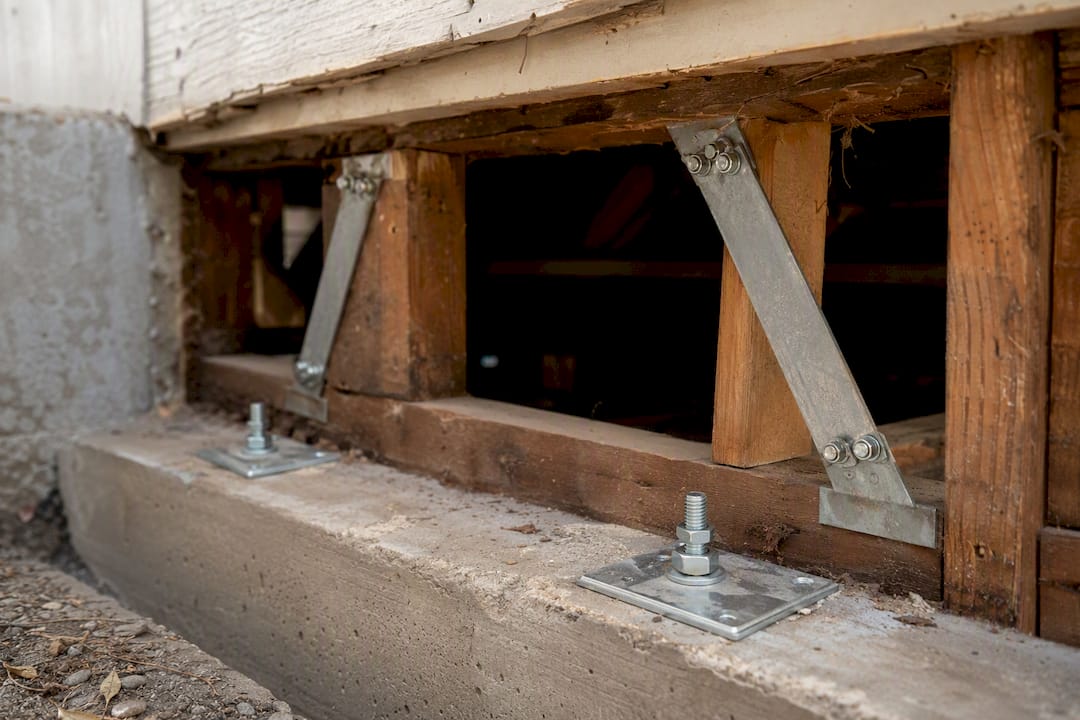
Several Bay Area cities run retrofit incentive or code-enforcement programs, and financing assistance sometimes exists at the local level, so check with your city’s building department. Nonprofit resources like Earthquakecountry outline the retrofit steps that matter most.
Pro Tip: Keep permits, contractor invoices, and inspection reports together in one file. Underwriters want documented proof, not just your word that the work happened.
What Happens After an Earthquake: The Claims Process
Safety comes first, then documentation. Here’s the practical order:
- Ensure safety and address any immediate hazards like gas leaks or structural instability.
- Photograph and video everything before making emergency repairs.
- Make only emergency repairs needed to prevent further damage; save receipts.
- Contact your insurer, HOA (if applicable), and mortgage servicer to start the claims process and confirm any escrow requirements.
Your deductible applies as a percentage of your dwelling limit, so a higher-valued dwelling with a substantial deductible means a large portion of damage comes out of your pocket before the policy pays.
Federal disaster assistance through FEMA typically arrives as loans, not grants, and only after a formal disaster declaration. Earthquake insurance is your primary financial protection, not a backup to federal aid, according to FEMA’s guidance.
How Insurance Status Affects Bay Area Home Sales
Kenneth Hogan has watched earthquake risk shape buyer confidence across two decades of Berkeley and Greater Bay Area transactions. Sellers who can document a verified retrofit or active earthquake policy often move through escrow with fewer buyer objections, particularly on older homes in Berkeley, Oakland, and Richmond where foundation questions come up routinely during inspection.
We typically flag insurance gaps for clients during the listing process, before a buyer’s inspector raises it as a surprise. That timing matters:
- Buyers increasingly ask about retrofit status and insurance during offer review, not after close.
- A documented retrofit can shorten negotiation time on price reductions tied to foundation concerns.
- Checking USGS fault maps for a specific property gives sellers language to address buyer concerns directly.
If you’re preparing to list or considering a purchase where fault proximity is a factor, Kenneth Hogan’s residential real estate services can walk through what your specific property needs before you go to market.
What the Data Actually Tells Bay Area Homeowners
The conventional advice on earthquake insurance treats it as a binary: buy it or don’t, based mostly on cost. That framing misses the real variable, which is your home’s specific fault proximity and soil type, not a generic Bay Area risk score. Two homes three miles apart can carry meaningfully different exposure.
Where most guidance falls short is timing. Homeowners tend to think about earthquake insurance reactively, after a news event or during a mortgage refinance, rather than checking their CEA offer at every renewal like the law allows. That built-in checkpoint gets ignored constantly.
If you’re deciding now, prioritize getting the actual CEA estimate before debating deductible percentages in the abstract. The number will tell you more than any general rule about Bay Area risk ever could. Pair that estimate with retrofit documentation if you have it, since that’s the fastest lever you control for lowering your premium.
Frequently Asked Questions
Is earthquake insurance required in California?
No. California doesn’t mandate earthquake insurance for homeowners, but insurers must offer it to you at initial policy purchase and every other renewal under state law.
What is earthquake insurance and how is it different from homeowners insurance?
Earthquake insurance is a separate policy covering shaking damage to your dwelling, personal property, and additional living expenses, all of which standard homeowners insurance excludes entirely.
How much does earthquake insurance cost in the Bay Area?
Cost depends on your home’s age, construction, foundation, soil type, fault proximity, and chosen deductible tier. Running the CEA estimator with your specific details gives the most accurate figure.
Can I get earthquake insurance if my HOA already has a master policy?
Yes, and you often should. Master policies can leave loss-assessment gaps for individual unit owners, which is what CEA condo unit policies are designed to address.
Does a seismic retrofit actually lower my premium?
Verified retrofits like foundation bolting typically reduce your premium because they lower structural failure risk, according to CDI guidance. Document the work with permits and inspection reports for your insurer.
Sources
- Earthquake Insurance – California Department of Insurance
- California Earthquake Authority — Coverage options and deductibles
- Earthquake insurance – FEMA
- U.S. Geological Survey (USGS)
Recommended
- How to Navigate Fluctuating Interest Rates as a Homebuyer or Seller – Kenneth Hogan Realtor – Compass
- Predicting Future Interest Rate Trends in the Real Estate Market – Kenneth Hogan Realtor – Compass
- First-Time Home Buyer Realtor Berkeley, CA | Kenneth Hogan
- Home Staging Tips to Help Your Property Sell Quickly and For Top Dollar – Kenneth Hogan Realtor – Compass