


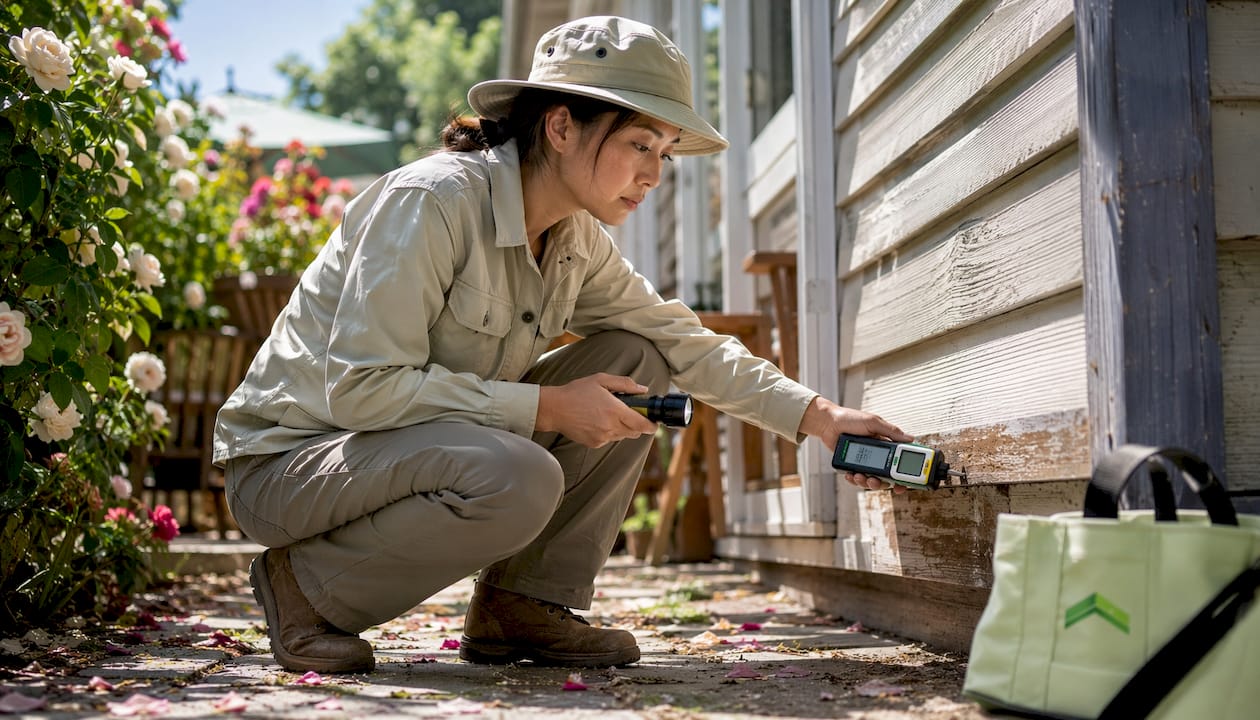
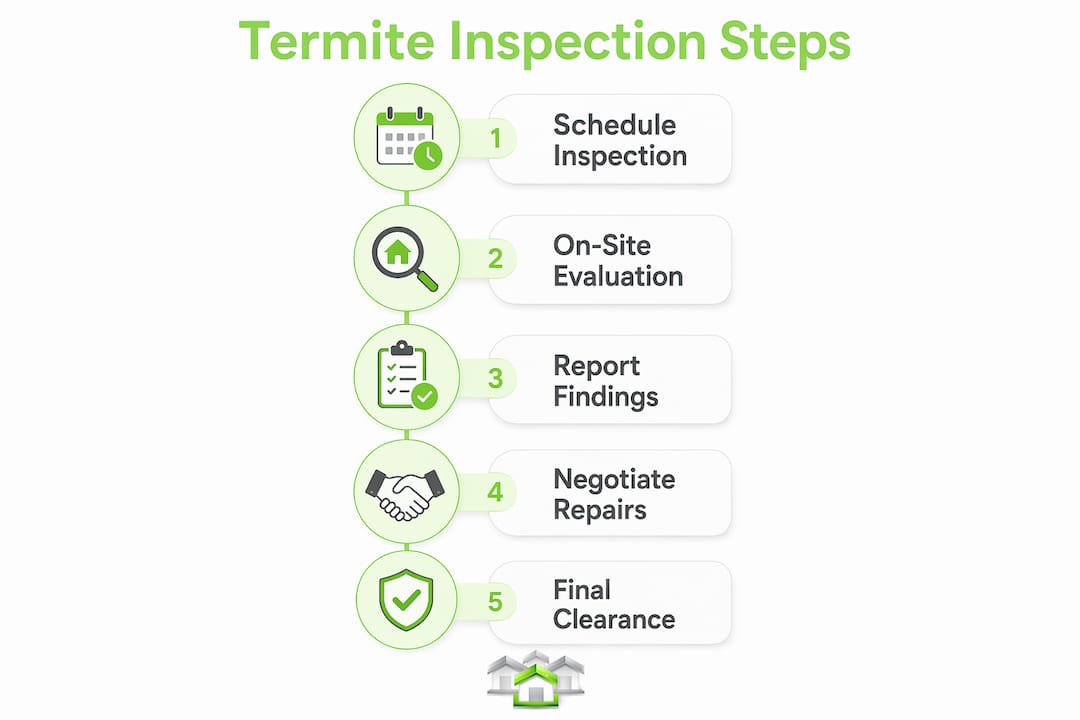
California does not legally require a termite or Structural Pest Control (SPC) inspection for every home sale. In the Bay Area, inspections happen because lenders require them or because a buyer’s purchase contingency calls for one. That distinction matters when you’re planning your transaction timeline.
Your three immediate steps:
- Confirm your lender’s requirement. If you’re financing the purchase, ask your loan officer whether a formal Wood Destroying Organism (WDO) report is required before funding.
- Schedule during due diligence, not at the last minute. Buyers should schedule inspections as close to close of escrow as possible, since inspectors report only what’s visible on the inspection date.
- Order a state-registered WDO/SPC report, not a free sales estimate. A free consumer estimate is a sales document, not a formal escrow report. Only a licensed SPC inspector’s registered report carries the legal liability required for real estate closings.
What the report covers: A formal WDO report goes well beyond subterranean termites. State law requires it to identify wood-destroying organisms and conditions likely to cause future problems, including drywood termites, wood-boring beetles, fungus, dry rot, excessive moisture, and earth-to-wood contact. The report is divided into two sections:
- Section 1: Active infestation or existing damage. These items often must be corrected for escrow clearance and lender approval.
- Section 2: Conditions likely to lead to future infestation. These are typically negotiable and don’t automatically block closing.
Receiving findings in either section is common and doesn’t mean the deal falls apart. The report becomes a negotiation tool.
Who pays: California law does not assign cost responsibility to either party. In practice, buyers typically pay for the inspection itself ($75–$300 depending on property size and complexity), while sellers often agree to cover Section 1 remediation if it’s negotiated into the contract. Section 2 items are frequently left to the buyer, accepted as-is, or handled through a price credit.
Seller checklist before listing:
- Order a pre-listing SPC report so repair costs are known before offers arrive
- Disclose any existing reports to buyers — any ordered or existing WDO report is a material fact under California law
- Get written, line-item treatment quotes so you can negotiate from a position of knowledge
- Verify your inspector holds a current license with the California Structural Pest Control Board (SPCB) and carries proof of insurance
- Confirm inaccessible areas are noted on the report — these can delay clearance if left unaddressed
After termite-related structural repairs, cosmetic work like door and trim replacement is often needed. Bay Area home-improvement contractors can handle finish carpentry quickly so your listing timeline stays on track.
Pro Tip: A current inspection is always preferable to retrieving old SPCB records. Record retrieval can be slow, and a fresh report reflects actual current conditions — which is what escrow and lenders need.
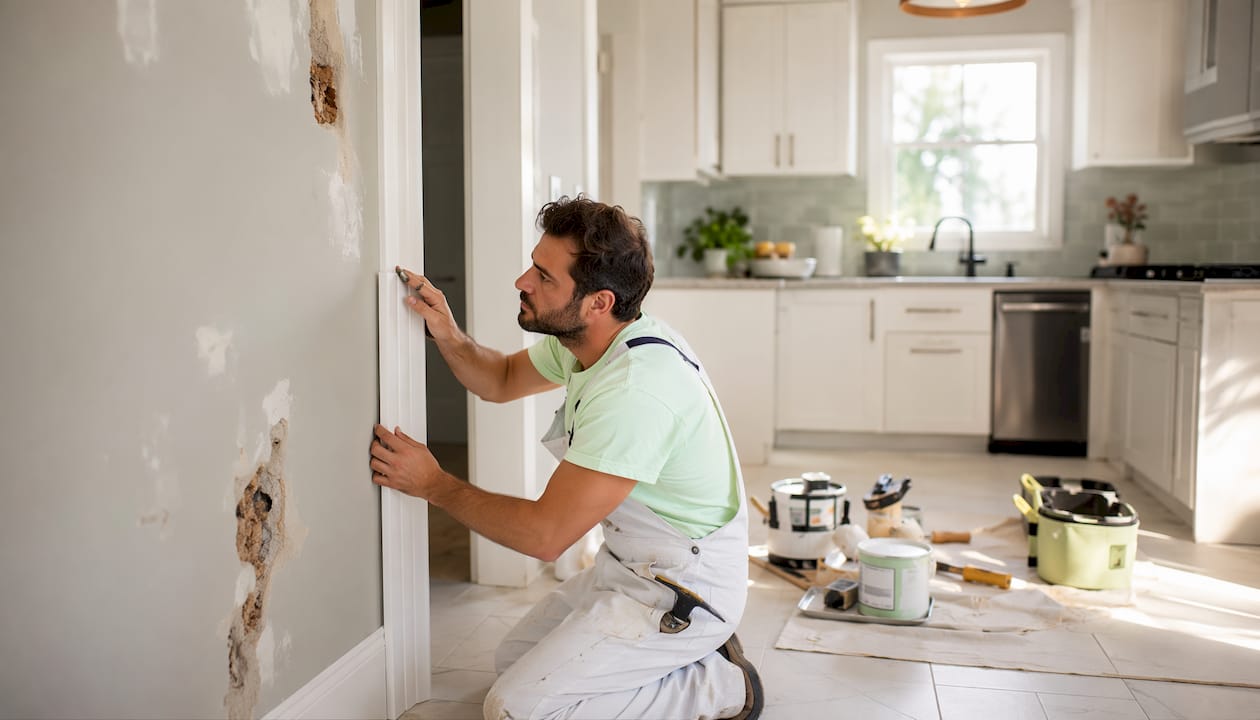
Table of Contents
Kenneth Hogan Helps You Manage Every Step of the Process

Termite inspections are one piece of a larger transaction puzzle, and how you handle them affects your negotiation position, your listing price, and your closing timeline. Kenneth Hogan brings over 20 years of local experience coordinating WDO inspections, vetting SPC-licensed inspectors, and negotiating repair credits and escrow holdbacks across Berkeley and the Greater Bay Area.
For sellers, a pre-listing inspection strategy means you control the narrative before buyers do. For buyers, agent-managed scheduling and negotiation means you’re never left interpreting a Section 1 finding alone.
We support you with:
- Listing services, pricing strategy, and pre-listing preparation
- Buyer representation and inspection contingency management
- Negotiation support for repair credits, seller-paid remediation, and escrow holdbacks
Ready to build a transaction plan that includes termite inspection strategy? Connect with Kenneth Hogan to get started.
Key Takeaways
A Bay Area termite inspection is a negotiation tool, not a deal-breaker — knowing the Section 1 vs. Section 2 distinction and who pays for what puts both buyers and sellers in a stronger position at the table.
| Point | Details |
|---|---|
| Inspections aren’t legally required | California law doesn’t mandate them; lenders and purchase contingencies are the real drivers. |
| WDO report cost range | Formal escrow reports typically cost $75–$300 depending on property size and complexity. |
| Section 1 vs. Section 2 | Section 1 items often require clearance before closing; Section 2 items are generally negotiable. |
| Sellers benefit from going first | A pre-listing SPC report lets sellers price accurately and disclose proactively, reducing surprises. |
| Kenneth Hogan’s role | Kenneth Hogan coordinates inspections, vets licensed inspectors, and negotiates outcomes for buyers and sellers across the Bay Area. |
Recommended
- How to Navigate Fluctuating Interest Rates as a Homebuyer or Seller – Kenneth Hogan Realtor – Compass
- Predicting Future Interest Rate Trends in the Real Estate Market – Kenneth Hogan Realtor – Compass
- Listing Agent Services in Berkeley, CA | Kenneth Hogan
- First-Time Home Buyer Realtor Berkeley, CA | Kenneth Hogan