


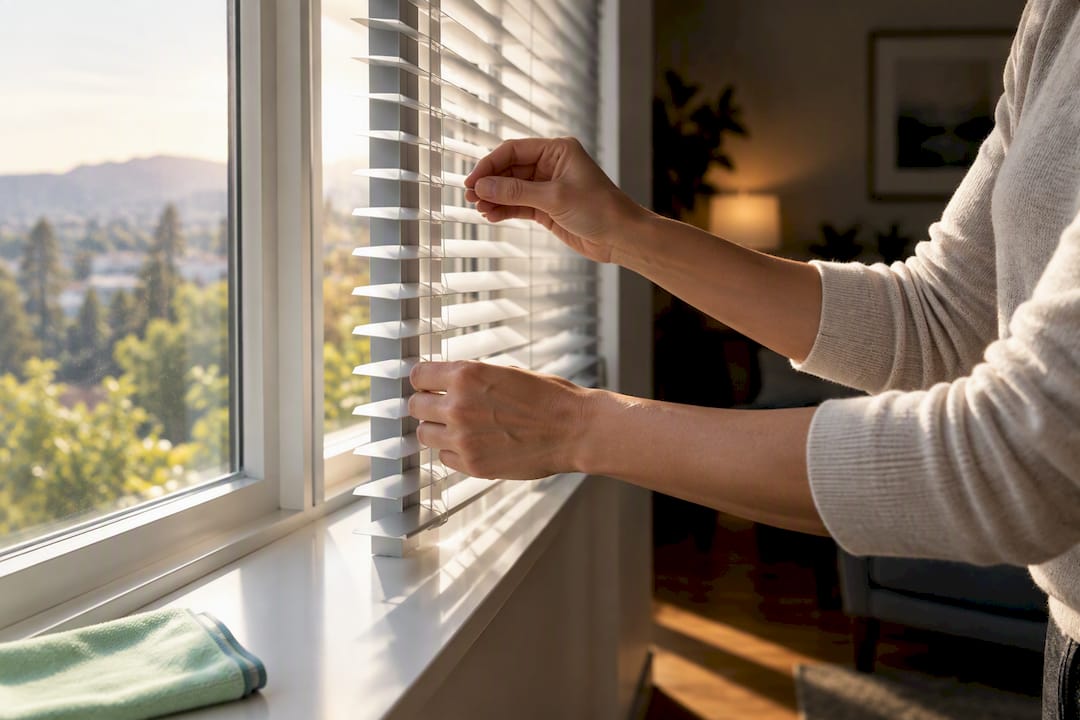
Start prepping 48 hours before your shoot, and be fully ready by the afternoon before the photographer arrives. The three tasks that move the needle most are decluttering every surface, matching bulbs so light reads consistently across rooms, and clearing the exterior of cars and bins. Confirm access with your agent or photographer, and plan to be away during the 30 to 90 minute shoot window.
TL;DR:
- Deep cleaning, decluttering, and repairing visible flaws must be completed 48 hours before the shoot to ensure high-quality photos.
- Consistent lighting, matching bulbs, and uniform blind heights are critical in every room to prevent color cast issues and uneven brightness.
- Exterior clutter must be cleared out, and lawns mowed with proper timing, especially in Berkeley’s foggy microclimates, to capture appealing curb shots.
- Turning on all lights and removing cars or trash bins from view are essential on shoot day to maximize interior brightness and compositional clarity.
- Coordinating professional staging, prep timing, and photographer scheduling enhances marketability and reduces potential delays or need for reshoots.
Table of Contents
- Whole-Home Timeline for Listing Photos Prep in Berkeley
- Room-by-Room Checklist for Berkeley Home Sellers
- Curb Appeal and Exterior Checklist Before the Shoot
- Lighting, Windows, and Blinds: What Photographers Check First
- What to Expect From Your Photographer on Shoot Day
- Local Tips From Kenneth Hogan on Berkeley-Specific Prep
- Editorial Take: What the Prep Checklist Gets Wrong
- Get Help Preparing Your Berkeley Listing for Photos
- Sources
- FAQ
Whole-Home Timeline for Listing Photos Prep in Berkeley
Rushing the morning of a shoot is one of the most common reasons photos come back looking flat or cluttered. A structured timeline, starting two full days ahead, gives you room to fix problems before the camera shows up. This same 48-hour approach is standard photographer guidance across the industry, and it works because it separates the heavy lifting from the last-minute polish.
Here’s how we break it down for Berkeley sellers and listing agents:
- 48 hours out: Deep clean every room, declutter closets and counters, and repair anything visibly broken (a cracked switch plate, a chipped baseboard). This is also when you should lock in staging furniture or schedule movers if you’re renting pieces.
- The day before: Set every blind and shade to the same height, wipe window sills and glass, and swap any burned-out or mismatched bulbs for a consistent color temperature. Mow the lawn, sweep walkways, and clear anything sitting in the yard.
- Morning of the shoot: Turn on every light in the house, even in daylight. Do a final walk-through room by room, set the thermostat to a comfortable temperature for the photographer, and move cars and trash bins completely out of frame.
This sequence matters because certain jobs, like deep cleaning, take real time. Others, like turning on lights, take thirty seconds but get forgotten when sellers are rushing.
Room-by-Room Checklist for Berkeley Home Sellers
Photographers consistently flag the same missed spots, and most of them come down to surfaces that are too busy or too personal. Clearing them is one of the highest-return moves in any listing photography checklist, and it costs nothing but time.
Kitchen
- Clear counters until they’re roughly 70% empty. Coffee makers, dish racks, and cutting boards all read as clutter in wide shots.
- Hide small appliances inside cabinets when possible.
- Wipe down stainless steel appliances and remove magnets, kids’ art, and takeout menus from the fridge.
Living room
- Coil or hide visible cables, remotes, and chargers.
- Fluff pillows and straighten throws.
- Remove busy patterned rugs or extra furniture that crowds the walking path.
Bedrooms
- Make beds with neutral, wrinkle-free linens.
- Clear nightstands down to a lamp and maybe one small item.
- Remove personal photos and anything with a name or face on it.
Bathrooms
- Clear toiletries, toothbrushes, and towels from counters and shower edges.
- Clean glass shower doors and mirrors until they’re streak-free.
- Close toilet seats and swap in matching neutral towels.
Entry and flow areas
- Keep sightlines clear from room to room. Photographers often shoot through doorways to show depth.
- Sweep floors and remove shoes, umbrellas, or bins by the front door.
A quick tip that works in almost every Berkeley home we’ve prepped: if a room feels “off” in person, it will look worse on camera. Trust that instinct and simplify further.
Curb Appeal and Exterior Checklist Before the Shoot
The front exterior shot is often the first image a buyer sees online, which makes it the single highest-stakes frame in the whole shoot. Get this wrong and even great interior photos won’t save the click-through rate.
- Park all vehicles out of frame, ideally in the garage or down the street.
- Remove visible trash bins, hoses, and recycling containers from the driveway and side yard.
- Mow the lawn, edge the walkways, sweep porches, and clear small garden clutter like hoses or toys.
- Close the garage door unless you specifically want it photographed open and staged.
- Take down distracting signs, including temporary HOA or contractor notices.
- Schedule exterior shots for soft morning or late afternoon light, and if you’re adding a twilight shot, plan for a short window.
Lighting, Windows, and Blinds: What Photographers Check First
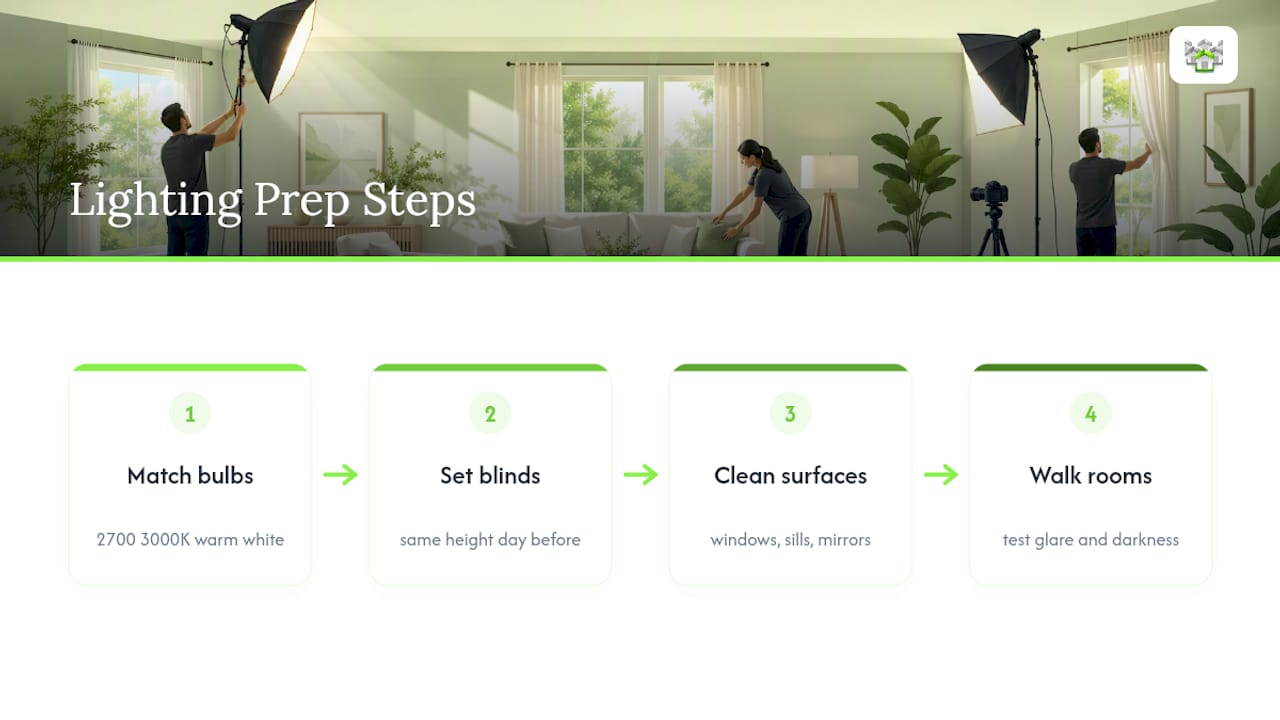
Light is the raw material of every listing photo, and small inconsistencies in it are hard to fix after the fact. Replace burned-out bulbs and match color temperature across each room, aiming for warm white in the 2700K to 3000K range, since mixed color temperatures create a color cast that’s tough to correct in editing.
Set every blind and shade to the same height the day before, then clean the sills underneath. Cameras pick up dust that the human eye tends to skip right over. Polish mirrors and clean windows inside and out. A streak-free window does more for natural light than almost any other single task in this checklist.
Statistic Callout: Professional, well-lit listing photos measurably increase buyer engagement and can shorten time on market, according to research on real estate photography and buyer decision-making-576-584).
Pro Tip: Walk each room at the time of day your shoot is scheduled. If a window throws harsh glare or a room goes dark, you’ll want to know before the photographer does.
What to Expect From Your Photographer on Shoot Day
Confirm logistics before the day arrives so nothing stalls the shoot once the photographer is on-site.
- Access: Share gate codes, lockbox details, parking instructions, and any special entry steps in advance.
- Your presence: Plan to be away during the shoot. Sellers hovering nearby, even with good intentions, tends to slow everything down.
- Pets: Secure or remove pets before the appointment. Photographers typically won’t handle animals or move heavy furniture, so plan for that ahead of time.
- Special add-ons: If you’ve booked a drone shot or a 3D tour, confirm whether utilities need to be on and whether there are any added scheduling requirements.
Local Tips From Kenneth Hogan on Berkeley-Specific Prep
Berkeley’s microclimates change morning light more than sellers expect. Homes near the hills or close to the bay can sit under fog well past 9 a.m., so we often schedule exterior shots around when that fog window typically clears rather than defaulting to first light.

The most common mistakes we see locally are small rooms crammed with too much furniture, blinds set at different heights across a single facade, and HOA or building notices left taped up where they land in frame. None of these take long to fix, but they’re easy to miss without a second pair of eyes.
Coordinating prep directly with your listing agent also reduces the risk of a relist. A listing that underperforms in its first two weeks often needs new photos and a price adjustment, which costs more time than getting it right the first time.
Editorial Take: What the Prep Checklist Gets Wrong
Most listing prep advice treats staging as the main event, when in reality the photographer’s technical needs matter more. A beautifully staged room with mismatched blind heights or a mixed color temperature still photographs poorly, while a modestly staged room with consistent light and clean windows often photographs better than sellers expect.
The conventional advice oversells big-ticket staging and undersells the boring fixes: matching bulbs, leveling blinds, clearing counters to something close to bare. Those are the details that separate a listing that looks professionally shot from one that looks like a phone snapshot with better lighting.
If you only have time for three things, skip the accent pillows and focus on light consistency, exterior clutter, and counter space. Those three cover most of what makes a Berkeley listing photograph well, and they’re also the fastest to execute under real deadline pressure.
— Kenneth
Get Help Preparing Your Berkeley Listing for Photos
An alternative to handling listing prep alone is to coordinate prep timing, staging advice, and photographer scheduling as part of one listing strategy.

A first call typically covers your timeline, what condition the home is in today, and whether a vendor like Fix. Move. Haul. or a stager should be brought in before the shoot. We also walk through home staging choices room by room, since the right furniture arrangement changes how a photographer can shoot a space. Coordinated prep and professional photography work together to reduce time on market and pull in more serious buyers from the first day a listing goes live.
If you’re getting ready to list in Berkeley or the surrounding East Bay, reach out through our listing agent services page to schedule a consultation and get your prep timeline set.
Sources
For a downloadable version of this process, see The 48-Hour Checklist and UC Berkeley’s housing photo guidance, both useful references for verifying your own room-by-room prep.
- The 48-Hour Checklist: How to Prepare Your Home for a Real Estate Photo Shoot
- How to Prepare Your Home for Real Estate Photography: Complete Checklist
FAQ
How Do I Prepare for Listing Photos?
Start 48 hours before the shoot with a deep clean and declutter, then finish blinds, bulbs, and exterior tidying the day before. On shoot morning, turn on every light and clear cars and bins from view, following the standard 48-hour timeline most photographers recommend.
What Is the “3 Wall Rule” for Real Estate Photography?
Definitions of this rule vary by photographer, but it generally refers to keeping at least three walls visible and uncluttered in a room shot so the space reads as open rather than boxed in. It’s less a fixed standard than a practical habit for framing wider, more spacious-looking rooms.
How Much Does a Real Estate Photographer Make Per House?
Photographer rates vary widely by market, package, and add-ons like drone or twilight shots, and current pricing is best confirmed directly with local providers. It isn’t something Kenneth Hogan publishes, since photographer fees are set independently by each vendor.
What Famous People Live in Berkeley?
Berkeley has long been home to notable academics, authors, and public figures tied to the University of California, Berkeley community, though specific current residents aren’t something we track or publish. The city’s reputation draws heavily from its academic and cultural history rather than any single resident.
What Does Kenneth Hogan Charge for Listing Prep Help?
Pricing depends on the scope of service, and current rates for listing agent support are available directly on the Kenneth Hogan services page. Reach out for a consultation to get a quote specific to your property and timeline.