


An easement limits what you can build, who can cross your land, and sometimes what you can charge for access — but it does not transfer ownership. If an easement has surfaced on your title or a neighbor is claiming one, take these three steps before you say anything to anyone:
- Pull your recorded deed and any recorded instruments at the county recorder’s office.
- Order a licensed land survey to pin the easement’s exact location and dimensions.
- Preserve all evidence of current use — dated photos, written records, utility maps — and avoid granting verbal permission for any access, since permissive use can defeat a prescriptive claim.
California law recognizes easements under Civil Code §801 and related servitude provisions. Adverse possession operates under a separate standard governed by CCP §325, which requires five years of possession plus payment of all property taxes. Knowing which statute applies to your situation shapes every decision that follows.
Key Takeaways
California easement disputes are almost always resolved faster and at lower cost when owners check recorded title, commission a survey, and consult an attorney before taking any action that could waive their rights.
| Point | Details |
|---|---|
| Check title first | Pull recorded deeds and easement instruments at the county recorder before contacting a neighbor. |
| Survey resolves most factual disputes | A licensed land survey pins easement location to exact coordinates and often ends the disagreement without litigation. |
| Prescriptive easements require a period of continuous use as specified by California law | Open, notorious, continuous, and hostile use for five years can create an easement under California law; permissive use defeats the claim. |
| Record every release or modification | An unrecorded release leaves a title cloud that surfaces in every future preliminary title report. |
| Kenneth Hogan | Coordinates survey, title, and negotiation support for Berkeley and Bay Area buyers and sellers facing easement questions. |
Table of Contents
- What are easement issues in California, and why do they matter?
- How California law creates property easements
- What disputes actually look like between neighbors
- Checklist for buyers and current owners before acting
- How to resolve easement conflicts without going to court
- When you need to take an easement dispute to court
- How easements end or change in California
- When to call a professional and what to bring
- What easements mean for Bay Area transactions
- Local easement guidance for Berkeley buyers and sellers
- Sources
What are easement issues in California, and why do they matter?
An easement is a legal right to use someone else’s land for a specific purpose. The easement holder gains a use right — not ownership. That distinction matters because the remedies for an easement dispute differ sharply from those for a boundary or title ownership fight.
- Easement dispute: One party has a right to use land; the conflict is about scope, interference, or whether the right exists at all. Remedies typically include injunctions and declaratory relief.
- Boundary dispute: The parties disagree about where one parcel ends and another begins. The remedy is usually a quiet title action.
- Adverse possession: A party claims ownership of land through long, open, and exclusive use. Under CCP §325, California requires five years of continuous possession plus payment of all property taxes during that period.
Confusing these three categories leads owners to pursue the wrong legal theory and waste time and money. A boundary or easement dispute requires early clarification of which problem you actually have before selecting a path forward.
Common real-world examples include shared driveways, utility corridors running beneath a yard, drainage channels crossing a rear lot, and solar easements protecting a neighbor’s panel access from shading.
How California law creates property easements
California recognizes five main pathways for easement creation:
- Express grant: Written, signed, and recorded in the chain of title. The most enforceable form because the terms are explicit.
- Prescriptive easement: Open, notorious, continuous, and hostile use for at least five years. No payment of taxes required — that distinguishes it from adverse possession.
- Easement by necessity: Arises when a parcel is landlocked and has no other legal access to a public road.
- Implied easement from prior use: Courts recognize this when a single owner divides land and prior use of one portion for the benefit of another was apparent and continuous.
- Equitable easement: A court-created remedy when strict enforcement of property rights would cause disproportionate hardship.
Appurtenant vs. in gross. An appurtenant easement benefits a neighboring parcel and transfers automatically when either property is sold. An easement in gross benefits a specific person or entity — a utility company, for example — and does not attach to land ownership.
Civil Code §801 lists recognized servitudes, including solar easements, which protect access to sunlight for solar energy systems. Section 813 of the same code allows a landowner to record a notice that any use of their property is permissive — a practical tool for defeating a future prescriptive claim before it matures.
Key statutory signal: Recording a Civil Code §813 notice costs relatively little and can stop a prescriptive easement from forming by converting open use into permitted use.
What disputes actually look like between neighbors
Common neighbor easement problems in California cluster around a handful of recurring scenarios:
- A neighbor parks vehicles in a shared driveway strip, blocking access.
- A utility company needs to dig up a yard for maintenance and the owner disputes the scope.
- A fence or retaining wall encroaches into a recorded access easement, narrowing the usable width.
- Drainage easements are blocked by landscaping, causing flooding on the burdened parcel.
- One party claims a prescriptive easement over a path used for decades without written permission.
Courts examine specific facts in prescriptive claims: Was the use open and visible? Was it continuous for five years without the owner’s permission? Was it hostile — meaning without a license? Permissive use is the most common defense against a prescriptive claim, which is exactly why granting verbal permission is risky.
Partial encroachment carries real legal weight. A 12-foot easement reduced to 8 feet by a fence or structure can materially impair the easement holder’s rights and justify court relief, even if access is not completely blocked.
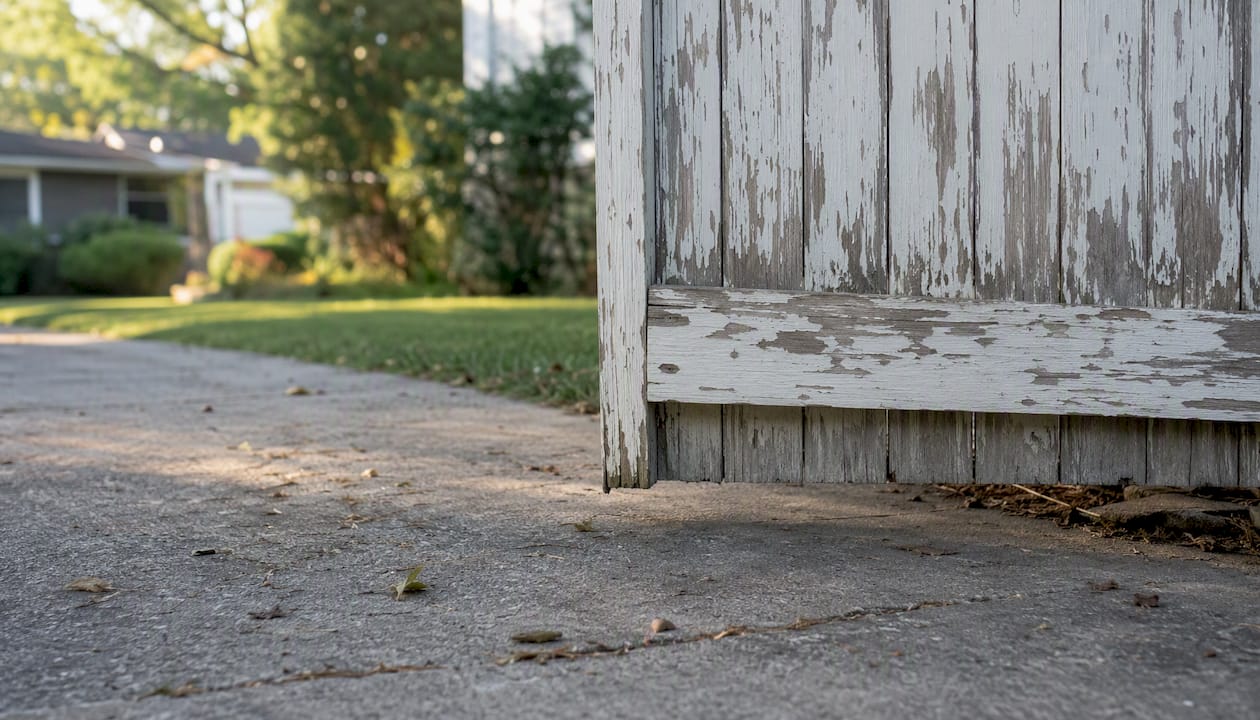
Pro Tip: Document the current physical condition of any easement area with dated photographs before you contact a neighbor or attorney. That baseline record becomes evidence if the dispute escalates.
Checklist for buyers and current owners before acting
For buyers before closing:
- Order a preliminary title report and read every recorded easement, CC&R, and restriction listed.
- Commission a current licensed land survey — do not rely on the seller’s old survey.
- Review seller disclosures for any known easement disputes or neighbor conflicts.
- Check recorded subdivision maps and plats at the county recorder’s office.
- Confirm utility easement locations with the relevant utility companies.
For current owners confronting a dispute:
- Gather your deed, title insurance policy, and any recorded easement agreements.
- Collect historical photos, utility maps, and any written correspondence about access.
- Preserve witness names and contact information for people who have observed use of the easement area.
- Avoid granting any verbal permission for access until you have spoken with an attorney.
Reviewing recorded easements before closing is one of the most effective ways to avoid disputes entirely. For owners of multi-unit properties in Berkeley, shared driveways and utility corridors make this checklist especially relevant.
How to resolve easement conflicts without going to court
Most California easement disputes resolve without litigation when the parties follow a structured, non-adversarial sequence:
- Confirm the recorded right. Pull the deed and any recorded easement instruments. Understand exactly what the document grants — the purpose, width, and any maintenance obligations.
- Commission a survey. A licensed land surveyor can pin the easement to exact coordinates. Vague deed descriptions cause most factual disputes, and a survey often resolves the disagreement before anyone files anything.
- Negotiate a written maintenance or access agreement. Allocate costs, define permitted uses, and specify what modifications require consent. Get it signed and recorded.
- Try mediation. A neutral mediator familiar with California real estate law can facilitate an agreement faster and cheaper than a court can.
Civil Code §841, California’s Good Neighbor Fence Act, provides a useful model for cost-sharing agreements between adjoining owners. The same principle applies to shared driveways and drainage easements: a written, recorded agreement that spells out each party’s responsibilities prevents future disputes and protects both sides at resale.
Pro Tip: Before sending any written demand to a neighbor, have a California real estate attorney review it. A poorly worded letter can waive rights or create admissions that complicate your position later.
When you need to take an easement dispute to court
Legal action becomes appropriate when a recorded right is being violated and negotiation has failed, or when measurable harm is ongoing. Early attorney guidance and a timely documentary review consistently improve outcomes and reduce escalation costs.
California courts offer these remedies:
- Declaratory relief: The court declares the existence, scope, or validity of an easement. Useful when the parties dispute whether an easement exists at all.
- Injunction: Orders a party to stop interfering with an easement or to remove an encroachment. Often sought alongside declaratory relief.
- Quiet title: Resolves ownership of land, not use rights. Appropriate for boundary disputes, not pure easement conflicts.
- Damages: Compensates for measurable harm caused by interference with an established easement.
- Equitable easement: A court grants a use right to avoid disproportionate hardship, even without a recorded instrument.
Evidence courts typically require includes recorded deeds, survey reports, historical photographs, utility records, tax receipts (critical for adverse possession under CCP §325), and witness testimony about the history of use.
Litigation timelines in California vary, but a straightforward easement case can take one to two years from filing to resolution. Attorney fees, expert surveyor reports, and title research drive most of the cost.
How easements end or change in California
An easement does not last forever by default. The main termination routes are:
- Express release: The easement holder signs a written release, which is then recorded. This is the cleanest method and clears title for future buyers.
- Merger: When one person acquires ownership of both the dominant and servient parcels, the easement merges into fee ownership and extinguishes.
- Abandonment: Requires clear, affirmative acts showing intent to permanently give up the right — non-use alone is rarely enough under California case law.
- Expiration: If the original easement document set a time limit or condition, the easement ends when that term or condition is met.
- Court modification: A court can relocate or modify an easement when strict enforcement causes unreasonable hardship and the modification does not materially harm the easement holder.
Always record any release or modification at the county recorder’s office. An unrecorded release leaves a cloud on title that will surface in every future preliminary title report.
When to call a professional and what to bring
Triage guide:
- Licensed land surveyor first when the dispute is about location, width, or physical boundaries. Surveys resolve factual questions faster than attorneys can.
- California real estate attorney before sending written demands, filing any court action, or signing any agreement that affects recorded title.
- Title company when you need a preliminary title report, title insurance, or help interpreting recorded instruments.
- Mediator after the facts are established but the parties cannot agree on terms.
Documents to bring to any professional consultation:
- Current deed and any recorded easement instruments
- Preliminary title report (if available)
- Recorded subdivision map or plat
- Dated photographs of the easement area
- Any written correspondence with the other party
- Tax receipts (required for adverse possession claims under CCP §325)
- Witness names and contact information
A surveyor typically turns around a boundary or easement location survey in two to four weeks. An attorney consultation on a straightforward easement question usually takes one to two hours. Litigation, if it becomes necessary, runs significantly longer and costs more — which is why the non-litigation path deserves a genuine effort first.
What easements mean for Bay Area transactions
We see easement questions surface regularly in Berkeley and Greater Bay Area listings, and the pattern is consistent: properties with clearly documented, recorded easements close faster and with fewer price reductions than those where the easement status is ambiguous. Buyers and their agents request surveys, ask for recorded instruments, and want to see that any neighbor disputes are resolved before they remove contingencies.
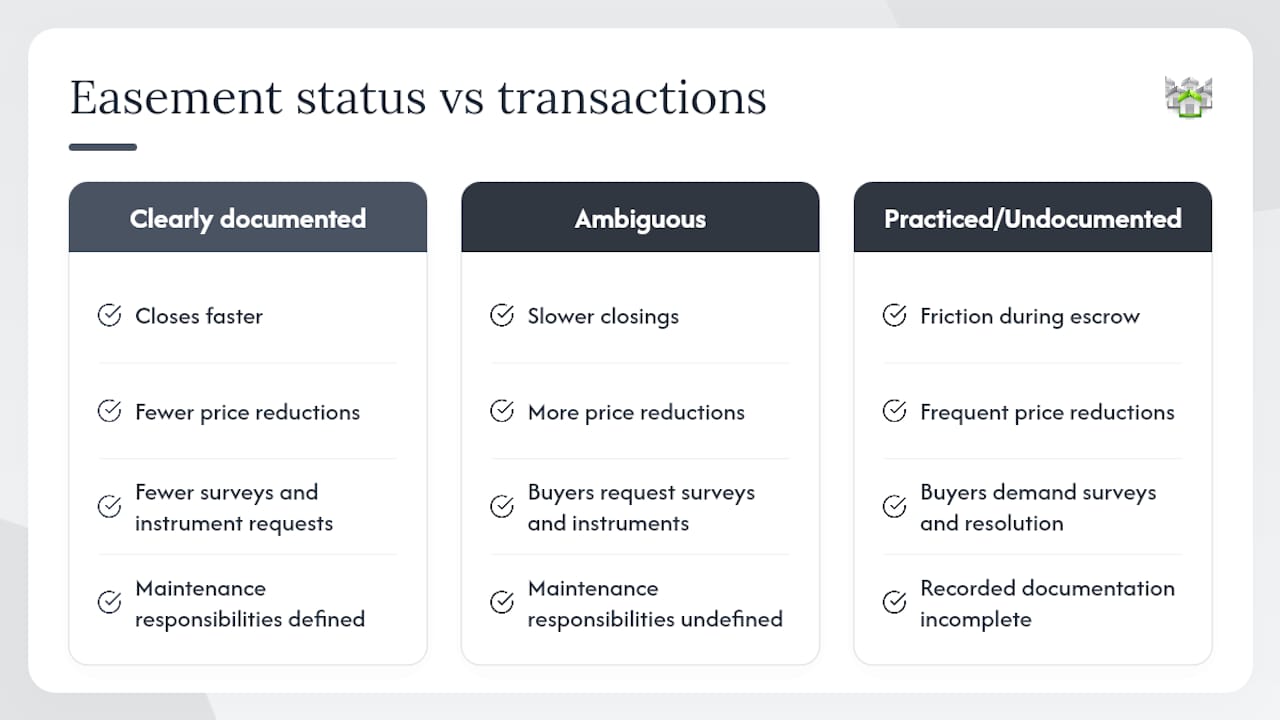
The properties that create the most friction are those where an easement exists in practice — a shared driveway used for decades, a utility corridor that crosses a rear yard — but the recorded documentation is incomplete or the maintenance responsibilities are undefined. Sellers who address this before listing, by ordering a survey and recording a clean maintenance agreement, consistently preserve more of their asking price than those who leave it for buyers to discover.
Easement disputes are common and can become expensive when they surface mid-transaction. Getting ahead of the issue, with the right professionals and the right documents, is the move that protects both the sale and the relationship with a neighbor.
Local easement guidance for Berkeley buyers and sellers
Easement questions in Berkeley and the Greater Bay Area often involve older properties with shared driveways, utility corridors, and rear-lot access routes that were never formally documented. Kenneth Hogan’s residential real estate services cover exactly this kind of pre-listing and pre-offer review — coordinating with licensed surveyors and title officers, interpreting recorded instruments, and advising on how to present or negotiate easement disclosures without losing deal momentum.

Whether you are preparing to list a property with a shared driveway or evaluating a purchase where the preliminary title report flagged an easement, we can help you read the documents, ask the right questions of the right professionals, and protect your position. Reach out through Kenneth Hogan’s Berkeley real estate page to schedule a consultation.
Sources
Statutes and primary law:
- California Civil Code (selected servitudes and recording provisions)
- Easement disputes in California | Vokshori Law Group
- California easement law for property owners | LegalClarity
Practice guides and legal resources:
Local help:
This article is general information, not a substitute for advice from a qualified lawyer. Consult a qualified legal professional about your own circumstances before acting on anything here.
Recommended
- How to Navigate Fluctuating Interest Rates as a Homebuyer or Seller – Kenneth Hogan Realtor – Compass
- Predicting Future Interest Rate Trends in the Real Estate Market – Kenneth Hogan Realtor – Compass
- Listing Agent Services in Berkeley, CA | Kenneth Hogan
- Real Estate Agent Services in Berkeley, CA | Kenneth Hogan