


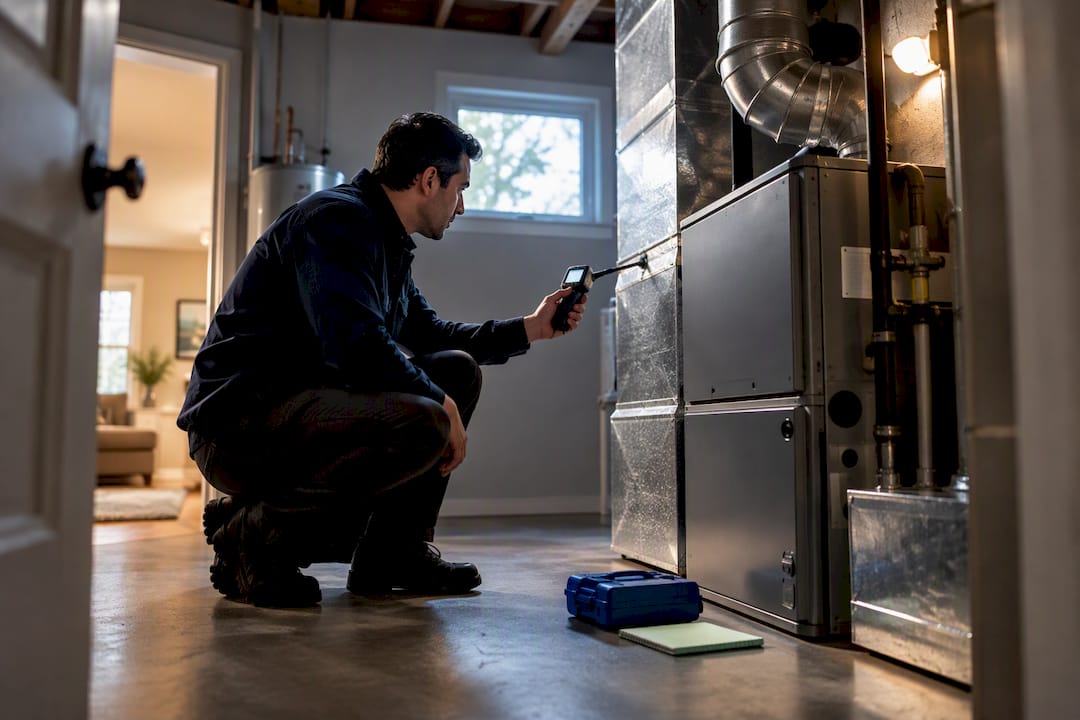
Selling a home in Berkeley starts with three time-sensitive moves: order a Home Energy Score and pick a BESO compliance path, pull together your Transfer Disclosure Statement and tenant paperwork, and price your home with the city’s transfer tax already factored into your net proceeds. Get these three moving early, and everything else on this home selling checklist falls into place on schedule.
TL;DR:
- Ordering a Home Energy Score early and choosing a compliance path can prevent delays in Berkeley’s selling process, with assessments filling up quickly.
- Preparing tenant and disclosure records in advance ensures smoother escrow and reduces the risk of postponements caused by missing paperwork.
- Understanding Berkeley’s tiered transfer tax and factoring BESO upgrade costs into net proceeds helps sellers set realistic pricing and timing strategies.
- Focusing on safety repairs, energy upgrades, and staging before listing attracts buyers and shortens time on market.
- Treating BESO compliance as a pre-listing task rather than escrow work accelerates sale closing and minimizes surprises during the process.
Table of Contents
- Your step-by-step Berkeley home selling checklist
- What Berkeley’s BESO and Home Energy Score rules actually require
- Disclosures and tenant rights every Berkeley seller must handle
- Pricing, transfer tax, and timing your Berkeley sale
- Getting the home ready: repairs, staging, and marketing basics
- Evaluating offers and closing the sale
- Local lessons from selling in Berkeley
- What Berkeley sellers get wrong about compliance
- How an experienced local agent helps Berkeley sellers move through this checklist
- Official Berkeley resources to bookmark before you list
- Sources
- FAQ
Your step-by-step Berkeley home selling checklist
Selling in Berkeley follows the same broad arc as anywhere else, listing, offers, escrow, close. But the details in between are where local sellers get tripped up. Here is the order we recommend, broken into three phases.
Pre-listing (four to eight weeks out):
- Pull your deed, mortgage payoff statement, prior inspection reports, and any permit records for past work.
- Request a copy of your current property tax bill so your agent can help estimate proceeds.
- Book a registered BESO assessor for your Home Energy Score, even if you plan to defer upgrades.
- Start gathering documentation for whichever BESO compliance path fits your situation.
- Pull a rent registry printout from the Berkeley Rent Board if any part of the property is tenant-occupied.
Listing phase:
- Set your asking price using recent comparable sales in your specific micro-neighborhood.
- Schedule professional photography once repairs and staging are complete.
- Write MLS public remarks that include your Home Energy Score and chosen compliance path.
- Assemble your full disclosure packet, including the Transfer Disclosure Statement and HES report, before your first showing.
- Confirm security deposit transfer details if you have tenants in place.
Escrow and closing:
- Coordinate with your title and escrow officer on whether you’re submitting a Certificate of Compliance or an Upgrade Deposit Form.
- Track your contingency calendar closely: inspection, appraisal, and loan contingencies each carry their own deadlines.
- Confirm final occupancy terms, especially if tenants remain in place at closing.
- Have transfer tax paperwork and disclosure documents ready for your escrow officer well before the closing date.
The pre-listing phase is where most delays start. Sellers who treat BESO and tenant paperwork as afterthoughts often find themselves pushing their listing date by weeks while they wait on an assessor or chase down a rent registry file.
What Berkeley’s BESO and Home Energy Score rules actually require
Berkeley’s Building Emissions Saving Ordinance requires sellers of single-family homes and duplexes to complete a Home Energy Score assessment before listing. The score stays valid for five years, so if you had one done recently for a prior sale attempt or refinance, it may still count.
From there, you have three paths to compliance:
- Complete enough upgrades to earn the required credits under the Resilience Standard and submit for a Certificate of Compliance through the BESO Portal, along with a $150 filing fee.
- Qualify for the heat-pump exemption if your home already meets the city’s criteria.
- Defer the upgrades entirely by coordinating a $5,000 Upgrade Deposit with your title company at closing.
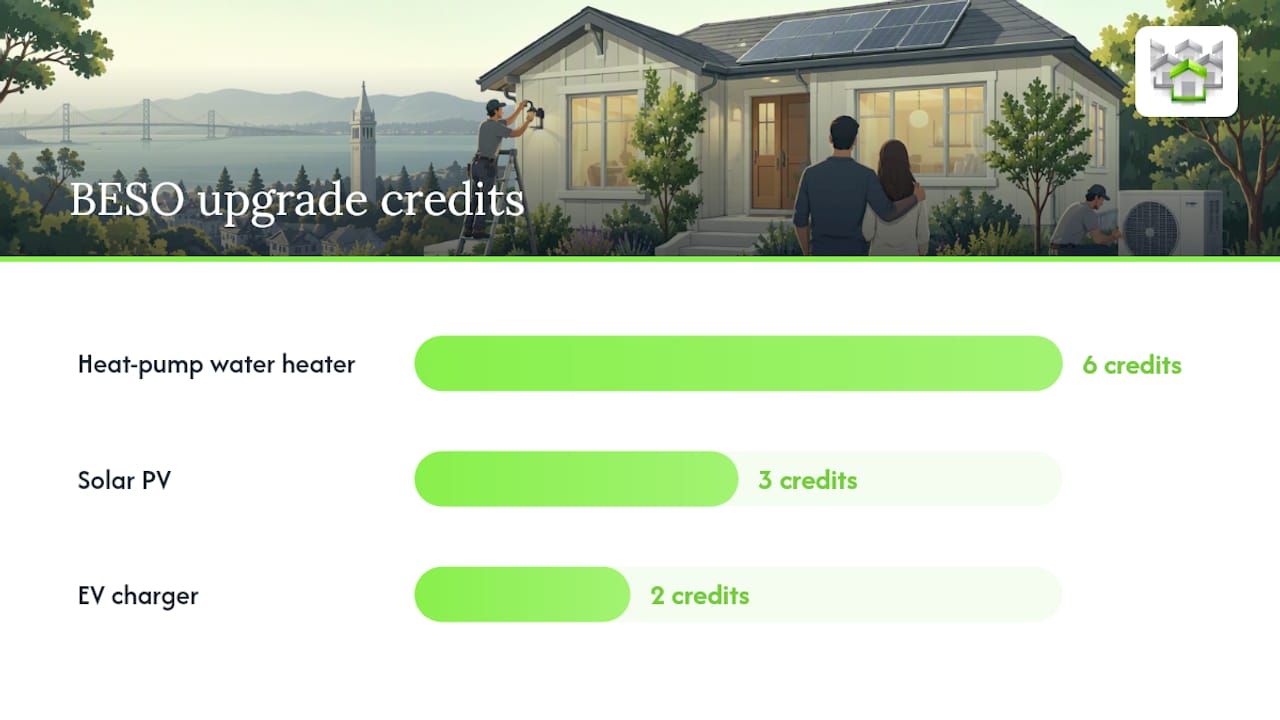
The BESO Compliance Guide breaks down credit values for specific upgrades: a heat pump water heater earns 6 credits, solar PV earns 3, and an EV charger earns 2, with bonus credits available for homes that score 9 or 10 on their HES. Your HES report needs to appear in both your disclosure packet and your MLS property notes.
Not complying carries a real cost. Skipping the Home Energy Score before listing can trigger a $500 non-compliance fee from the city, on top of whatever delay it causes in escrow.
Pro Tip: Book your BESO assessor the same week you decide to sell. Assessor calendars fill up fast, and a late booking is one of the most common reasons Berkeley listings slip their target date.
Disclosures and tenant rights every Berkeley seller must handle
Every Berkeley seller must provide a Transfer Disclosure Statement covering known material facts about the property’s condition. The TDS reflects your actual knowledge as the owner, not a warranty or guarantee, so accuracy matters more than perfection.
If any unit is occupied, Berkeley’s Rent Board makes clear that a sale is not grounds for eviction. Tenant protections transfer to the buyer along with the property, which means your buyer needs to understand exactly what they’re inheriting before they sign.
- Request a rent registry printout from the Rent Board early in the pre-listing phase.
- Transfer security deposits to escrow or directly to the buyer as part of closing.
- Notify tenants of the sale as required and keep documentation of that notice.
- Include Rent Board records in your escrow file so your buyer’s lender has no surprises.
Pro Tip: Pull your Rent Board documentation before you accept an offer, not after. Buyers and their lenders often ask for tenant history the moment escrow opens, and a missing file can stall the whole transaction.
Pricing, transfer tax, and timing your Berkeley sale
Pricing a Berkeley home means looking past citywide averages and into your specific pocket of the market. Elmwood, Thousand Oaks, and the Berkeley Hills each carry their own pace and buyer expectations, and a strong comp three blocks away can be nearly meaningless if it sits in a different micro-market.
Your net proceeds also depend on Berkeley’s transfer tax, which the city applies on a tiered basis: 1.5% up to a set threshold and 2.5% or higher above it, with the exact tiers subject to change under city ballot measures. Check the current thresholds on the city’s page before you finalize your pricing strategy, since this tax comes directly out of your proceeds at closing.
-
Pull comps from your specific neighborhood, not citywide averages.
-
Factor BESO compliance costs, whether upgrades or the deposit, into your net proceeds estimate.
-
Confirm the current transfer tax tier that applies to your expected sale price.
-
Build in lead time for HES assessment, any contractor permits, and typical Berkeley escrow windows.
Federal tax rules can also work in your favor. Owner-occupants who lived in the home two of the last five years may exclude [up to $250,000 in capital gains]((https://www.irs.gov/taxtopics/tc701) ($500,000 for married couples filing jointly), which is worth confirming with a tax advisor as you plan your timeline.
Getting the home ready: repairs, staging, and marketing basics
Berkeley buyers respond to specific details, so prioritize the fixes that matter most before you spend on cosmetic touches.
- Address safety issues first, particularly outdated knob-and-tube wiring, which shows up often in Berkeley’s older housing stock and worries buyers and lenders alike.
- Check attic insulation and consider upgrades that also count toward BESO credits.
- Handle cosmetic repairs, fresh paint, worn flooring, and outdated fixtures, before photography.
- Stage rooms to highlight outdoor space, natural light, and any energy upgrades already in place.
- Draft MLS remarks that mention your Home Energy Score and note proximity to transit, since walkability and BART access matter to Berkeley buyers.
Exterior maintenance deserves attention too. A seasonal hardscape and concrete checklist can help you time walkway and patio repairs so they’re finished, not half done, by the time photos are scheduled.
Evaluating offers and closing the sale
Once offers start coming in, look past the headline price. Earnest money amount, contingency length, financing type, and proposed closing date all affect how reliable an offer really is.
- Compare cash offers against financed ones, since financing adds appraisal risk and a longer timeline.
- Review inspection and repair requests carefully, particularly any tied to BESO upgrades or tenant-occupied units.
- Confirm your BESO Certificate of Compliance or Upgrade Deposit Form is ready before your closing date.
- Have transfer tax paperwork, your TDS, and title/escrow contact details organized in one file.
- Finalize possession instructions, especially if tenants remain in the home past closing.
Shorter contingency periods can signal a stronger buyer, but only if their lender has already confirmed financing. A fast closing date sounds appealing until it collides with an unfinished BESO upgrade or an unresolved tenant transition.
Local lessons from selling in Berkeley
The mistakes we see most often are timing mistakes: sellers who book a BESO assessor too late, tenants whose paperwork gets assembled the week before closing instead of the week the listing starts, and permit records for past upgrades that go missing right when they’re needed.
Book your Home Energy Score assessor and any contractors four to eight weeks before your target listing date, and loop in your title company early if you expect to submit an Upgrade Deposit or Certificate of Compliance. That lead time is the difference between a smooth escrow and a scramble.
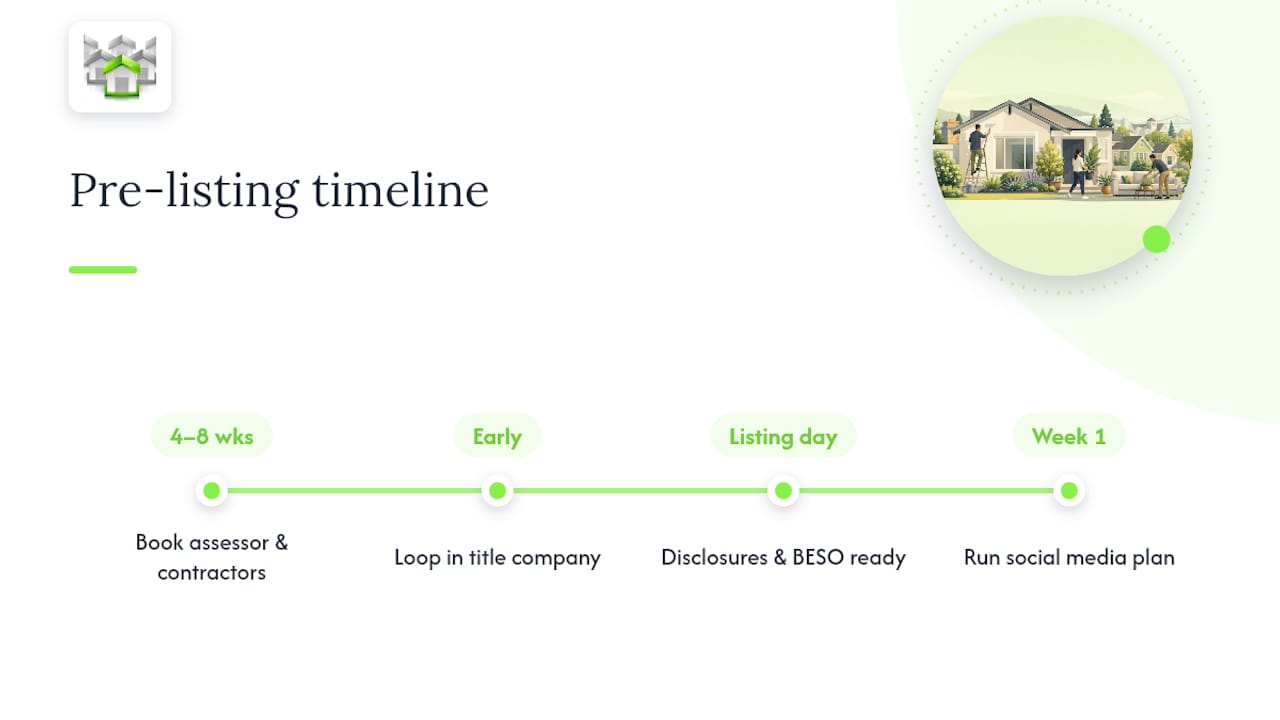
Fast marketing tactics matter too. A structured social media plan built around your listing’s first week can generate early buyer interest while your disclosure packet and BESO documentation are still coming together.
What Berkeley sellers get wrong about compliance
Most sellers treat BESO as a paperwork formality to handle during escrow. That’s backwards. The Home Energy Score and your chosen compliance path shape your pricing strategy, your marketing angle, and your timeline from day one, not just your closing paperwork.
The conventional advice, price the house, list it, then worry about disclosures, works fine in markets without Berkeley’s specific rules. Here, it puts sellers at risk of a late assessor booking derailing a listing date they already promoted.
Our take: treat BESO compliance and tenant documentation as pre-listing tasks, not escrow tasks. A seller who orders their Home Energy Score and pulls Rent Board records before writing a single line of marketing copy will almost always close faster and with fewer surprises than one who waits.
— Kenneth
How an experienced local agent helps Berkeley sellers move through this checklist
Every item on this checklist gets easier with a local agent coordinating it alongside you. We help Berkeley sellers with pricing strategy built on neighborhood-level comps, BESO compliance coordination with assessors and title companies, and tenant-aware negotiation when a property is occupied.
- Pricing strategy grounded in Berkeley’s micro-neighborhood data, not citywide averages.
- Coordination with BESO assessors, contractors, and title companies on compliance timing.
- Tenant-aware negotiation support for occupied properties navigating Rent Board rules.
- Marketing and offer negotiation support from listing day through closing.
If you’re planning a sale and want a second set of eyes on your timeline, visit our services page to schedule a consultation.
Official Berkeley resources to bookmark before you list
Bookmark these before you start: the city’s Time-of-Sale Energy Requirements page, the BESO Compliance Guide PDF, the transfer tax page, Rent Board seller guidance, and the IRS home sale exclusion page. Download the relevant forms early so nothing holds up your escrow.
This article is general information, not a substitute for advice from a qualified financial advisor. Consult a qualified financial professional about your own circumstances before acting on anything here.
Sources
- Time-of-Sale Energy Requirements for Small Residential Buildings | City of Berkeley
- Topic No. 701 Sale of Your Home | IRS
FAQ
What is the 3-3-3 rule in real estate?
The 3-3-3 rule is a general home buying guideline suggesting spending no more than three times your income on a home, keeping housing costs under three times your monthly gross pay, and saving three months of expenses in reserve. It’s a buyer budgeting concept rather than a Berkeley-specific seller requirement, so it doesn’t affect your disclosure or BESO obligations.
What are things I don’t need to do before selling my house?
You generally don’t need to complete every possible upgrade before selling, and Berkeley’s BESO rules specifically allow you to defer upgrades with a $5,000 Upgrade Deposit rather than completing them yourself. You also don’t need to renovate cosmetically finished spaces or replace systems that are functioning and disclosed accurately on your TDS.
What is the hardest month to sell a house?
Market timing varies by year and neighborhood, and Berkeley doesn’t have a single officially documented hardest month for sales. Winter months tend to see fewer active buyers in most Bay Area markets, so sellers often plan around spring and early fall listing windows when scheduling BESO assessments and repairs.
What are the three most important documents in a property sale?
For a Berkeley sale, the Transfer Disclosure Statement, the Home Energy Score report, and the closing paperwork covering transfer tax and either your BESO Certificate of Compliance or Upgrade Deposit Form are the core documents. The TDS covers what you know about the property’s condition, the HES report satisfies your BESO obligation, and the closing paperwork confirms your tax and compliance status are settled before the sale finalizes.
Does selling a rented property in Berkeley require extra paperwork?
Yes. Berkeley’s Rent Board guidance confirms that tenant protections transfer to the buyer, so sellers should provide a rent registry printout, transfer security deposits properly, and notify tenants of the sale as part of the standard disclosure process.