


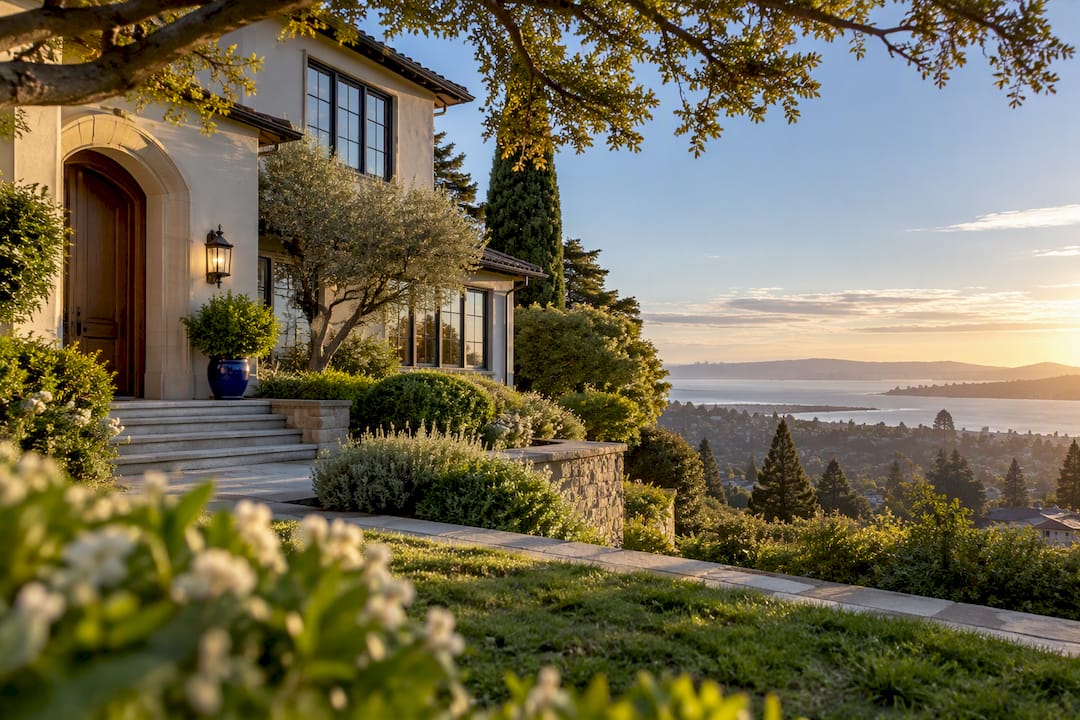
Berkeley’s luxury market is currently seller-leaning: inventory sits near 0.8 months of supply, the median single-family sale price is running near $1.7 million, and many desirable homes are closing above list price. If you’re serious about buying, the smart move now is to define your search criteria, secure proof of funds, and connect with a local specialist before you tour.
TL;DR:
- Limited inventory, at around 0.8 months of supply, keeps Berkeley’s luxury market competitive, with homes often selling above list price and close to $1.7 million median sale price.
- Most luxury demand centers in neighborhoods like Berkeley Hills and North Berkeley, where views, privacy, and walkability attract different buyer priorities.
- Buyers should verify BESO compliance, seismic retrofitting, and permit history before making offers, especially on hillside or historic homes, to avoid unexpected costs.
- Insiders recommend pre-approval for jumbo loans, a clear negotiation strategy, and rapid decision-making to secure desirable properties in this fast-moving market.
- The current market trend is sustained by low supply and strong wealth from the tech sector, with prices likely to remain firm unless mortgage rates shift significantly.
Table of Contents
- What the latest market numbers tell buyers
- Where Berkeley’s luxury inventory concentrates
- Berkeley’s BESO rules and your due diligence checklist
- Finding and touring current luxury listings
- What a Berkeley luxury specialist brings to your search
- What luxury buyers actually pay at closing
- How the Berkeley luxury buying timeline unfolds
- Where Berkeley’s luxury market is headed
- How Berkeley compares to neighboring luxury markets
- Who should buy now and who can afford to wait
- Work with a Berkeley luxury specialist who knows the terrain
- Sources
- FAQ
What the latest market numbers tell buyers
The headline number for anyone watching Berkeley’s luxury tier is supply, or the lack of it. As of the August 2026 snapshot, Berkeley’s detached single-family homes carried roughly 0.8 months of inventory, a level that keeps well-priced listings moving quickly and gives sellers room to hold firm on terms. Buyers who wait for more choices to appear have been waiting a while.
Pricing reflects that scarcity. The median sale price for detached homes reached approximately $1.7 million in August 2026, with the average price per square foot for sold homes near $946. Those numbers blend entry-level and luxury sales, so homes in Berkeley Hills or North Berkeley’s premium pockets often clear well above the median, especially when they carry views, updated systems, or architectural pedigree.
Velocity is the other half of the story. BayEast’s market tables show a high rate of homes selling above asking, frequently topping 120% of list price across multiple months in 2026. That pattern tells you two things: pricing strategy matters more than ever, and buyers who show up with clean offers and limited contingencies tend to win.
A few dynamics are keeping demand firm heading into the rest of 2026:
- Local tech-sector wealth continues to support demand for move-in-ready homes near Berkeley Hills and the Claremont corridor.
- Mortgage rate movement, tracked weekly through the Freddie Mac PMMS archive, still shapes how aggressively jumbo buyers compete for financed purchases.
- Limited new construction in established neighborhoods means most luxury inventory turns over from existing owners, not new builds.
| Metric | August 2026 Snapshot |
|---|---|
| Median sale price | $1.7 million |
| Average price per square foot | $946 |
| Months of supply | 0.8 |
These figures come from a single monthly snapshot, so treat them as a directional read rather than a permanent ceiling. Prices and pace shift month to month, but the underlying scarcity has held for most of 2026.
Where Berkeley’s luxury inventory concentrates
Luxury buyers in Berkeley tend to gravitate toward a handful of neighborhoods, each with a distinct feel and price posture.
- Berkeley Hills offers panoramic bay views, larger lots, and architecturally distinct homes, from mid-century modern designs to custom builds; expect a premium for view corridors and privacy.
- North Berkeley, including the Claremont and Elmwood pockets, blends walkable village charm with grand older homes near Claremont Country Club and the Rose Garden; this area saw some of the strongest buyer demand in Q2 2026, with several sales exceeding $3 million.
- Elmwood delivers craftsman and Tudor-style homes close to College Avenue’s shops and cafes, appealing to buyers who want luxury with a neighborhood feel rather than hillside seclusion.
- South Berkeley pockets near Piedmont Avenue and the Claremont border are emerging as value plays, offering renovated Victorians and bungalows at a relative discount to the hills.
Buyer fit varies by priority. Someone chasing unobstructed bay views and estate-like privacy will look to the hills; a family wanting walkability, top schools, and community will lean toward Elmwood or North Berkeley. Investors eyeing appreciation potential often watch the South Berkeley pockets, where renovation upside remains real.
Berkeley’s BESO rules and your due diligence checklist
Before you write an offer on a Berkeley home, understand the city’s Building Emissions Saving Ordinance. Under the BESO Administrative Regulations, sellers of 1 to 4 unit residential buildings must complete a Home Energy Score assessment before listing, and the resulting score must be disclosed in MLS public remarks. Resilience upgrades tied to that score must be completed prior to sale or within two years of purchase, and noncompliance can trigger administrative fees.
The 2026 BESO amendments added flexibility: a typical escrow deposit of a typical escrow deposit amount, often shared by buyer and seller, can satisfy upgrade requirements without forcing work before closing, and a heat-pump exemption pathway exists for qualifying homes. Installing a heat-pump water heater in Alameda County commonly runs several thousand dollars before rebates, a figure worth factoring into your offer if the seller hasn’t already addressed it.
For luxury properties specifically, run through this checklist before you get serious about an offer:
- Confirm the Home Energy Score is disclosed and still valid, since assessments hold for five years.
- Pull permit history on any additions, especially in hillside homes where unpermitted work is common.
- Ask about seismic retrofitting, particularly for pre-1980 construction in the hills.
- Check historic-status designations, which can restrict exterior changes.
- Confirm the age of major systems: roof, foundation, electrical panel, and HVAC.
- Order specialized inspections for hillside drainage, retaining walls, and any custom systems like elevators or pools.
Pro Tip: Ask your agent to request the seller’s BESO compliance documentation before your first tour, so you know upfront whether an escrow deposit or completed upgrade is already in place.
On the financing side, luxury buyers should have jumbo loan pre-approval or full cash proof of funds ready before touring, and should think carefully about contingency strategy. In a market where many homes sell above asking, a clean offer with a short inspection window often beats a higher price with heavy contingencies.
Finding and touring current luxury listings
Luxury inventory in Berkeley moves through a few distinct channels, and each behaves differently. Agent pocket listings offer speed and exclusivity but come with less public documentation, so you’re relying on your agent’s relationships and judgment. Curated brokerage pages give more polish and consistency, while full MLS feeds offer the broadest reach but the most competition once a listing goes live.
When you review a listing’s marketing package, look past the photos. Floor plans should match the square footage claimed, the Home Energy Score should be present and current, and disclosures should flag any known issues rather than glossing over them. A listing that’s light on disclosures or missing a floor plan is worth a second look before you commit time to touring.
On-site, bring someone who can evaluate systems quickly, not just aesthetics: a contractor or inspector familiar with older Berkeley housing stock is invaluable for hillside homes. Walk the perimeter for drainage and retaining wall condition, and ask about security and privacy if the home borders open space.
In a market this competitive, offer construction matters as much as price:
- Use clear escalation language that specifies your ceiling and the increment above competing offers.
- Increase earnest money deposits to signal seriousness without over-committing before inspection.
- Keep inspection windows tight but real, so you still catch major issues without slowing the deal.
What a Berkeley luxury specialist brings to your search
Buying in a market this tight rewards local relationships and pattern recognition that only come from years of transactions in the same neighborhoods. An experienced agent with many years in residential real estate across Berkeley and the Greater Bay Area can bring hands-on knowledge of financing challenges from a background in mortgages.
That experience translates into practical advantages for luxury buyers:
- Off-market sourcing that surfaces homes before they hit public MLS feeds.
- BESO compliance coordination, so energy assessments and escrow deposits don’t stall your closing timeline.
- Neighborhood valuation nuance that distinguishes a fair price in North Berkeley from an inflated one in a less proven micro-market.
- Negotiating premium escrow terms when appraisal gaps or resilience upgrade credits come into play.
Engaging a specialist early typically shortens your search and improves your odds in competitive submarkets, since you’re acting on information and access other buyers simply don’t have yet.
What luxury buyers actually pay at closing
Total transaction costs in a Berkeley luxury purchase extend well beyond the sale price. Buyers typically cover their own closing costs, which include loan origination fees for jumbo financing, title insurance, escrow fees, and recording charges. Sellers traditionally cover the real estate commission, which is negotiated per transaction rather than fixed, along with any BESO-related escrow deposit or resilience upgrade credit negotiated into the deal.
Property taxes in California follow Proposition 13 rules, based on the purchase price at the time of sale, so a luxury buyer’s new tax basis will typically be higher than the seller’s long-held basis. Buyers should also budget for a home inspection, any specialized inspections like seismic or drainage assessments, and homeowner’s insurance, which can run higher for hillside properties given wildfire exposure.
None of these costs are unique to Berkeley, but the scale of a luxury purchase means even small percentage differences in fees translate into real dollars. Getting a clear accounting of who pays what, and when, before you’re in escrow avoids surprises at the closing table.
How the Berkeley luxury buying timeline unfolds
A typical luxury purchase in Berkeley moves through several distinct phases, and understanding the pace helps you plan.
The search phase often takes the longest, especially given how little inventory sits on the market at any given time. Buyers frequently spend weeks or months narrowing neighborhoods and touring homes, sometimes through off-market access, before finding the right fit. Once you identify a home, the offer and negotiation phase moves fast, often within days given how quickly desirable listings attract multiple offers.
After acceptance, escrow typically runs 30 to 45 days for a financed purchase, shorter for cash. During that window, inspections, loan underwriting, and BESO compliance verification all happen in parallel. Appraisal can be a pinch point in a market with rising prices and thin comps, which is why experienced agents prepare supporting documentation in advance. Closing follows once financing clears and title transfers, at which point the buyer takes possession.

Where Berkeley’s luxury market is headed
Berkeley’s luxury segment has shown consistent strength through 2026, with Q2 reports pointing to rising median prices in North Berkeley and the Berkeley Hills alongside several sales above $3 million. That pattern suggests demand for premium, move-in-ready homes remains resilient even as broader housing affordability pressures persist across the Bay Area.
Mortgage rates remain a variable to watch. The Freddie Mac PMMS archive tracks weekly rate trends that directly affect how much buying power jumbo borrowers have, and any meaningful rate drop could pull more financed buyers into the market and tighten competition further.
Supply constraints look unlikely to ease quickly. Berkeley’s limited land for new construction, combined with an aging housing stock in high-demand neighborhoods, means most luxury inventory will keep coming from resale rather than new builds. Expect the current pattern, thin inventory paired with strong buyer urgency, to persist through the rest of 2026 unless rates shift substantially.
How Berkeley compares to neighboring luxury markets
Berkeley’s luxury tier sits in a distinct position relative to nearby Bay Area markets. Compared to Piedmont or the Oakland Hills, Berkeley offers a similar hillside luxury feel with the added draw of proximity to UC Berkeley and a denser walkable core in neighborhoods like Elmwood and North Berkeley. That combination often makes Berkeley attractive to buyers who want luxury living without fully suburban isolation.
Against San Francisco’s premium neighborhoods, Berkeley’s luxury homes generally offer more square footage and lot size for a comparable price point, which appeals to buyers prioritizing space over urban density. Compared to Marin County’s luxury enclaves, Berkeley trades some of that scenic seclusion for stronger walkability and a shorter commute into San Francisco via BART.
None of these markets move in isolation. Rate sensitivity and tech-sector wealth affect luxury pricing across the East Bay and San Francisco similarly, but Berkeley’s specific combination of academic proximity, hillside geography, and constrained inventory keeps its luxury segment competitive in its own right rather than simply tracking its neighbors.
Who should buy now and who can afford to wait
Long-term investors and owner-occupiers with stable financing have the strongest case to act now. Thin inventory and consistent buyer demand in neighborhoods like North Berkeley and the hills mean waiting rarely produces better pricing, only more competition once rates ease. If you fall into this group, get pre-approved, define your top two or three target neighborhoods, and move quickly when the right listing appears.
Short-term flippers face a harder case. Elevated prices and limited renovation-ready inventory compress margins, and BESO compliance costs add another variable to underwrite. If your timeline is short, look toward the South Berkeley pockets, where renovation upside still exists, and underwrite BESO costs conservatively before you commit.
— Kenneth
Work with a Berkeley luxury specialist who knows the terrain

Buying or selling a luxury home in Berkeley rewards preparation, and having someone who knows the neighborhoods, the BESO process, and the negotiation posture that wins in this market makes that preparation far less stressful. Real estate representation can include Luxury Real Estate services, First-Time Home Buyer support, Listing Agent services, and guidance on Condo Real Estate and Duplex & Multi-Unit Properties, often built on many years of Berkeley-specific experience.
Before your first consult, it helps to have:
- A rough budget range and financing posture, whether cash or jumbo pre-approval.
- Your top two or three target neighborhoods.
- Any must-haves, like views, lot size, or proximity to schools.
If you’re preparing a Berkeley home for sale, resources like a 60 to 90 day seller prep checklist or professional home organizing services can complement the presentation strategy your agent builds around your listing.
Visit the services page to see the full range of offerings and get in touch to start your search or your listing plan.
Sources
FAQ
What are the richest neighborhoods in Berkeley?
Berkeley Hills and the North Berkeley area around Claremont and Elmwood consistently concentrate the city’s highest-value homes, driven by bay views, larger lots, and architectural distinction. Q2 2026 reports noted several North Berkeley sales exceeding $3 million.
Are luxury home prices dropping in Berkeley?
No, Berkeley’s luxury prices have held firm through 2026, with the median detached home sale price near $1.7 million in the August snapshot and homes frequently selling above list price. Thin inventory, around 0.8 months of supply, has kept downward pressure off prices.
Where do affluent buyers typically look for homes in Berkeley?
Affluent buyers in Berkeley concentrate their search in Berkeley Hills for views and privacy, North Berkeley for walkable luxury near Claremont and Elmwood, and increasingly South Berkeley pockets for renovation-ready value. Each area suits different priorities, from seclusion to community walkability.
What are the current real estate trends in Berkeley, CA?
Berkeley’s current trend is tight supply paired with strong demand, particularly in North Berkeley and the hills, where Q2 2026 data showed rising medians and multiple sales above $3 million. Mortgage rate movement, tracked through Freddie Mac’s survey, remains the key variable to watch for the rest of 2026.