



A final walkthrough Berkeley buyer completes before closing confirms that the property matches the contract: condition, negotiated repairs, included items, and any Berkeley BESO paperwork are all in place before escrow records the sale. The CFPB and the City of Berkeley’s BESO program both weigh in on this step, and after more than 20 years guiding Bay Area buyers, we treat it as a verification step, not a second inspection.
TL;DR:
- The final walkthrough should verify that all repairs, included items, and documentation like BESO certificates are present and match the contract before closing.
- Buyers must review the Closing Disclosure against the Loan Estimate at least three days prior and gather all key documents, including repair invoices and permits, before the walkthrough.
- For Berkeley properties, confirming inclusion of the Home Energy Score report or exemption, and understanding how deferrals are documented, is essential for BESO compliance.
- Discovering issues during the walkthrough requires immediate documentation and communication with agents, escrow, and possibly involving further inspections or escrow holdbacks.
- Proper preparation, including scheduling during daylight with utilities turned on and involving professionals, helps avoid common pitfalls and ensures a smooth final walk for buyers.
Table of Contents
- Room-by-room final-walkthrough checklist you can use on the day
- Documents and timing to review before the walkthrough
- Berkeley-specific checklist: BESO items and how they appear at close
- If you discover issues during the walkthrough
- Practical tips from a Berkeley agent on avoiding common local pitfalls
- A note on why disciplined walkthroughs matter
- How Kenny Hogan helps with final walkthroughs and closing coordination
- Official documents worth reading before you close
- Sources
- FAQ
Room-by-room final-walkthrough checklist you can use on the day
A final walkthrough works best when you move through the property in the same order every time, so nothing gets skipped because you were distracted by one issue in an earlier room. HUD’s closing guidance recommends rechecking walls, ceilings, mechanical systems, plumbing, windows, and the roof as part of this final review.
Work through these areas:
- Interior surfaces: walls, ceilings, floors, windows, doors, cabinets, and closets for new damage since your offer.
- Switches and systems: flip every light switch, test outlets, run the HVAC briefly, and check vents for airflow.
- Plumbing: run each faucet, flush every toilet, and test showers and tubs for drainage and hot water.
- Appliances: confirm any included appliances power on and operate as expected.
- Exterior: visible roof areas, gutters, grading and drainage, fences, gates, and exterior lighting.
- Contract items: negotiated repairs match the signed repair scope, and any items the seller agreed to leave behind are present with the property cleared of debris.
Bring your phone and take timestamped photos or a short video as you go, and note the names of anyone present with you. This record matters if a dispute comes up later.
Pro Tip: Walk the exterior first while there’s still daylight, then finish inside so you’re not rushing the interior checks as the light fades.

Documents and timing to review before the walkthrough
Timing matters as much as the checklist itself. Under CFPB guidance, you must receive your Closing Disclosure at least three business days before closing, which gives you time to compare it against your Loan Estimate and flag anything that doesn’t match.
Before you arrive for the walkthrough, gather:
- Your Closing Disclosure, compared line by line against your Loan Estimate.
- Final repair invoices and the signed repair scope from your purchase contract.
- Permit sign-offs, if any repair work required one.
- A copy of the purchase contract and every addendum.
Confirm with your escrow or title officer who will record the sale, how funds transfer, and whether any holdbacks or deposits sit in escrow. If any document is missing or unclear, do not sign closing paperwork until escrow tells you how the gap will be resolved.
Berkeley-specific checklist: BESO items and how they appear at close
Berkeley adds a layer most other Bay Area cities don’t require: the Building Emissions Saving Ordinance, known locally as BESO. The BESO Compliance Guide requires sellers to deliver either a Home Energy Score report and Certificate of Compliance, or documentation of a valid exemption, as part of the transfer packet.
During your walkthrough, verify:
- A Home Energy Score report and Certificate of Compliance are included, or a documented exemption is on file.
- If the seller deferred upgrades instead of completing them, the BESO Upgrade Deposit Form and the associated deposit, or the Deferral to Buyer (Form C), appear in your transfer documents.
- For a duplex or other multi-unit building, each unit has its own score and certificate where the ordinance requires it.
- Escrow or title has instructions covering how a BESO certificate is recorded, or how a deferral and deposit are handled if upgrades are pushed to you as the buyer.
One note worth flagging: a real estate agent cannot file Form C on your behalf. If a deferral was arranged, you as the buyer need to submit it yourself through the City’s BESO Portal, so confirm that step is on your calendar before you close, not after.
If you discover issues during the walkthrough
Finding a problem during the walkthrough is stressful, but it rarely needs to derail closing if you handle it in order.
- Document the issue with photos, a short video, and written notes that include the time and anyone who witnessed it with you.
- Notify your agent and the seller’s side immediately, and loop in your escrow officer the same day.
- Ask for repair documentation, or request an escrow holdback with a clear scope of work and a completion deadline.
- If the issue is significant, treat it as a signal to bring in further inspection, not just a repair request.
Common escrow remedies include a completion escrow, a repair holdback with defined terms, or delaying funding and recording until the issue is resolved. Keep in mind that the walkthrough is not a substitute for your original inspection: that inspection should have happened early enough to leave room to resolve problems, and if something material surfaces now, it may call for legal or contract remedies beyond a simple holdback.
One document worth having on hand: the HUD closing guidance notes that your settlement agent should confirm all contract terms are satisfied before the closing meeting, and that you should leave with copies of your Closing Disclosure, Promissory Note, Mortgage, and Deed.
Practical tips from a Berkeley agent on avoiding common local pitfalls
A few habits make the walkthrough smoother for buyers we work with:
- Build a one-page pre-walk packet summarizing inspection findings, repair invoices, and the exact contract language for included items.
- Schedule the walkthrough with daylight to spare, confirm utilities are turned on ahead of time, and bring a tape measure, outlet tester, and a charged phone.
- Invite your agent, and a contractor or inspector if a repair needs a trained eye.
- Confirm possession terms separately from closing. In California, key release is a contract term and doesn’t always happen the moment you sign.
Pro Tip: If a repair looks incomplete, ask whether a targeted contractor re-check makes more sense than delaying the whole closing, it’s often faster and just as protective; you can easily find local contractors & subcontractors to help verify repairs or get quotes quickly.
A note on why disciplined walkthroughs matter
Buyers who avoid post-closing headaches are typically those who treat the walkthrough as a checklist exercise, not a formality. Small things, a missing BESO deposit form, a repair that’s half done, get caught here or they get caught later, usually at a worse time. Helping clients build a pre-walk packet and coordinating with escrow can ensure nothing slips through.
— Kenneth
How Kenny Hogan helps with final walkthroughs and closing coordination

Buyer representation includes final-walkthrough coordination, repair verification against the contract, and communication with escrow and title officers to help manage the process during the final days before closing.
| Service | What it covers |
|---|---|
| First-Time Home Buyer | Guidance through offer, inspection, and closing steps |
| Listing Agent | Pricing, marketing, and negotiation for sellers |
| Residential Real Estate | Buyer and seller representation across Berkeley |
| Condo Real Estate | Condo-specific purchase and sale support |
| Duplex & Multi-Unit Properties | Investment property purchase guidance |
| Luxury Real Estate | Higher-end property representation |
Visit our services page to see how we can support your closing, or reach out directly for a consultation.
Official documents worth reading before you close
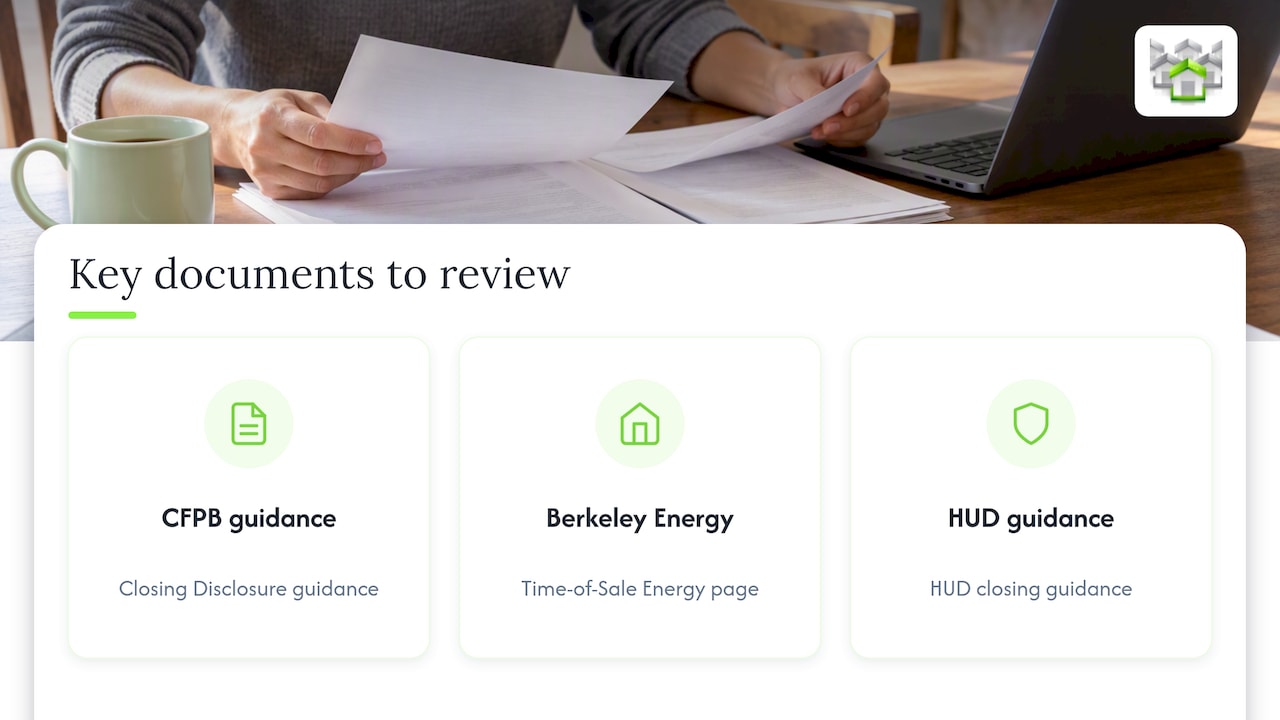
For the source documents behind this checklist, review the CFPB’s Closing Disclosure guidance, the City of Berkeley’s Time-of-Sale Energy page, and HUD’s closing guidance.
Sources
- Schedule a home inspection (CFPB)
- BESO Compliance Guide — City of Berkeley
- Closing the Deal (HUD guidance)
FAQ
What happens if a negotiated repair wasn’t finished by the walkthrough?
Document the incomplete work with photos and notes, then notify your agent and escrow immediately so they can arrange a repair holdback or completion escrow before you sign. Closing can typically proceed once a clear scope and deadline are set for the remaining work.
Is a final walkthrough the same as a home inspection?
No. The CFPB notes that a final walkthrough is not a substitute for a professional home inspection, which should happen earlier in the process with enough time to resolve any problems found.
How does Berkeley’s BESO requirement affect my closing paperwork?
Berkeley requires sellers to include a Home Energy Score report and Certificate of Compliance, or a documented exemption, in the transfer packet. If upgrades were deferred to you as the buyer, confirm the deposit form or Deferral to Buyer form is filed and you understand the follow-up timeline.
When do I actually get possession of the home?
Possession timing is a contract term, and in California it isn’t automatically the same moment as signing. Confirm the exact possession and key release terms with your escrow or title officer during the walkthrough, not after.
What should I bring to the final walkthrough?
Bring your Closing Disclosure, repair invoices, the signed contract and addenda, and simple tools like a tape measure and outlet tester. If a contractor completed repairs, bringing a contractor or inspector back for a targeted check can resolve doubts on the spot.