



The California FAIR Plan is a private association of all licensed property and casualty insurers in California, created in 1968 to provide basic fire insurance to homeowners who cannot obtain coverage in the standard market. It is not a state agency, and no taxpayer money funds it. As Insurance Commissioner Ricardo Lara has stated directly, the FAIR Plan supports homeowners as a last resort, bridging market gaps while remaining privately operated. For buyers and sellers in Berkeley and the Greater Bay Area, understanding how this program works, what it covers, and where it falls short is increasingly relevant as wildfire risk reshapes California’s insurance market.
Key facts about the California FAIR Plan Association:
- Created in 1968 following the riots and brush fires of the 1960s, established by statute under California Insurance Code sections 10090 et seq.
- Private, not public: All licensed property and casualty insurers in California are members; each participates in profits, losses, and expenses proportional to their market share.
- Regulatory oversight: The California Department of Insurance, led by Commissioner Lara, supervises the plan to protect consumers.
- Goal of attrition: The plan explicitly aims to support homeowners only until traditional coverage becomes available again.
- Not a replacement: It provides basic fire coverage, not a full homeowners insurance policy.
Table of Contents
- What does the FAIR Plan actually cover?
- Why the FAIR Plan has real limits as a long-term solution
- How Berkeley and Bay Area homeowners should approach the FAIR Plan
- How to find a registered broker and what happens next
- Key Takeaways
What does the FAIR Plan actually cover?
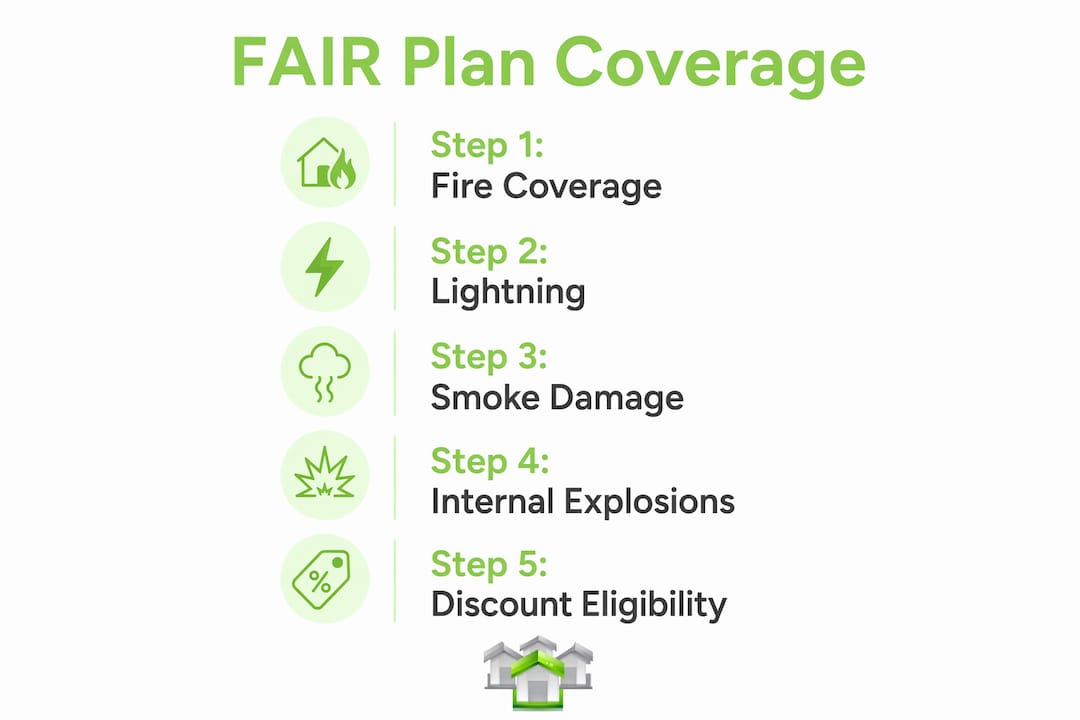
The basic FAIR Plan policy covers four named perils: fire, lightning, smoke, and internal explosions. That is the full scope of standard coverage. It does not include liability, theft, vandalism, flood, or earthquake protection.
Coverage applies to the structure of the property and its contents damaged by those named perils. The residential policy limit is $3 million, excluding land value. Commercial property policies carry a limit of $20 million per structure.
What drives your premium? Several factors come into play:
- Location: Proximity to wildfire-prone areas raises rates significantly.
- Home age and construction: Older homes or those with outdated roofing face higher premiums.
- Claims history: Prior claims on the property affect pricing.
- Coverage level: Adding optional coverages increases the premium.
Homeowners who fire-harden their properties may qualify for a discount on the wildfire portion of their premium. The FAIR Plan also offers flexible payment options, including monthly installments.
Pro Tip: Never treat the FAIR Plan as a standalone solution. Pair it with a Difference in Conditions (DIC) policy to fill the gaps, including liability, theft, and flood coverage. Together, the two policies can approximate the protection of a standard homeowners insurance policy.

Why the FAIR Plan has real limits as a long-term solution
The FAIR Plan is intentionally limited. Its stated goal is attrition: the plan succeeds when homeowners no longer need it. That design has real consequences for anyone relying on it long-term.
Key limitations to understand:
- No liability coverage: If someone is injured on your property, the FAIR Plan offers no protection.
- No theft or vandalism protection: Standard homeowners policies include these; the FAIR Plan does not.
- No earthquake or flood coverage: These require separate policies, such as those offered through the California Earthquake Authority.
- Higher premiums: Rates tend to run higher than comparable traditional policies, with less coverage in return.
- Eligibility requirement: You must demonstrate multiple declined attempts to obtain traditional insurance before qualifying.
- Inspection requirement: The FAIR Plan conducts a risk assessment of your property. Any identified hazards typically must be corrected before the policy takes effect.
The plan does satisfy mortgage lender requirements, which matters for buyers financing a purchase. But lender compliance is a floor, not a ceiling. Continuing to search for voluntary market coverage while on the FAIR Plan is not optional; it is the expected path forward.
How Berkeley and Bay Area homeowners should approach the FAIR Plan
Local market conditions in the Greater Bay Area have made the FAIR Plan more relevant than it was a decade ago. Wildfire risk in the hills above Berkeley and Oakland, combined with insurers pulling back from California, has pushed more homeowners toward this option. We have worked with buyers and sellers navigating exactly this situation, and the path forward is consistent: document everything, work with the right professionals, and treat the FAIR Plan as a bridge, not a destination.
Here is how to approach it practically:
- Document your declined applications: Keep written records of every insurer that has turned you down. This documentation is required to qualify.
- Work with a registered broker: Only licensed property and casualty agents registered with the FAIR Plan can submit applications. Choose one with direct FAIR Plan experience.
- Add a DIC policy immediately: Do not wait. A Difference in Conditions policy fills the coverage gaps the FAIR Plan leaves open.
- Ask about California Earthquake Authority coverage: For Bay Area homeowners, earthquake coverage is a separate but critical consideration.
- Keep searching the voluntary market: Insurers’ appetites change. A broker who monitors the market can alert you when traditional coverage becomes available again.
At Kennyhogan, we have guided first-time buyers and long-time homeowners through the insurance challenges that come with Berkeley real estate for over 20 years. Insurance availability directly affects what a property is worth and how quickly it can close. We factor that into every transaction.
Pro Tip: Ask your broker specifically whether they have submitted FAIR Plan applications for properties in your zip code. Experience with local risk profiles, particularly in hillside Berkeley neighborhoods, makes a real difference in how smoothly the application moves.
How to find a registered broker and what happens next
The FAIR Plan’s Broker Search tool lets you find licensed agents registered to submit applications, searchable by zip code or city. The FAIR Plan does not endorse specific brokers, but the tool identifies who is currently registered and active.
Using a broker costs you nothing extra. There is no additional fee for broker assistance with a FAIR Plan application.
Practical next steps once you decide to pursue FAIR Plan coverage:
- Search for a registered broker using the FAIR Plan’s online tool at cfpnet.com.
- Have your broker conduct a diligent market search first. If traditional coverage is available, the FAIR Plan is not the right option.
- Submit your application through your broker, including documentation of prior declined coverage.
- Schedule the property inspection and address any flagged hazards promptly.
- Secure a DIC policy alongside your FAIR Plan policy before your closing date if you are in a transaction.
- Set a calendar reminder to revisit the voluntary market every six to twelve months.
For Berkeley and Bay Area sellers, disclosing insurance limitations early in a transaction prevents delays. Buyers who discover FAIR Plan reliance late in escrow sometimes get cold feet. Transparency upfront, paired with a clear explanation of supplemental coverage options, keeps deals on track.
Key Takeaways
The California FAIR Plan provides basic fire insurance as a last resort, with a $3 million residential limit, but requires supplemental coverage and active efforts to return to the voluntary market.
| Point | Details |
|---|---|
| Coverage is fire-only | The FAIR Plan covers fire, lightning, smoke, and internal explosions — nothing else without a supplemental policy. |
| Residential limit is $3 million | Coverage applies to structure and contents, excluding land value. |
| DIC policies fill the gaps | A Difference in Conditions policy adds liability, theft, and flood coverage the FAIR Plan excludes. |
| Eligibility requires proof of declines | You must document multiple failed attempts to obtain traditional insurance before qualifying. |
| Brokers cost nothing extra | Licensed agents registered with the FAIR Plan submit applications at no additional cost to you. |
Recommended
- Predicting Future Interest Rate Trends in the Real Estate Market – Kenneth Hogan Realtor – Compass
- How to Navigate Fluctuating Interest Rates as a Homebuyer or Seller – Kenneth Hogan Realtor – Compass
- First-Time Home Buyer Realtor Berkeley, CA | Kenneth Hogan
- Listing Agent Services in Berkeley, CA | Kenneth Hogan